Blog
Dolma and Sarma in Turkish Cooking: What’s the Difference?
Dolma and sarma often arrive on the same Turkish table and may even share a rice-based filling, yet the two words describe different kitchen actions. One is about filling a hollow space; the other is about wrapping a leaf around a filling. Understanding that distinction makes menus easier to read and opens a useful window onto the regional ingredients, serving customs and shared work behind these dishes.
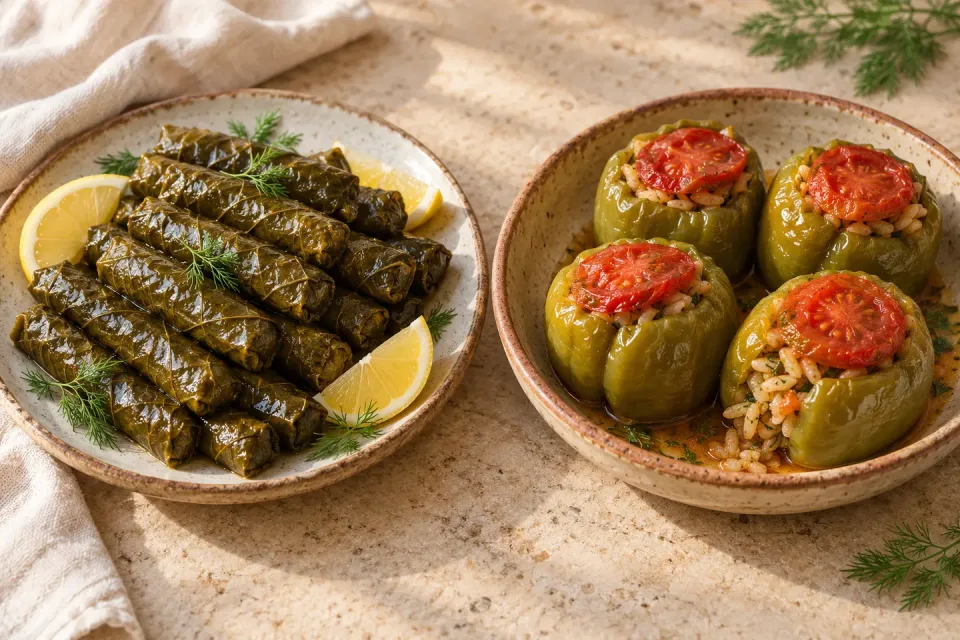
The technique is hidden in the name
Sarma comes from the Turkish verb sarmak, meaning to wrap or roll. A filling is placed on a flexible leaf—most famously grape leaf, but also cabbage, chard or other edible greens—and the leaf is folded around it. Dolma is connected to dolmak, meaning to become filled. Peppers, aubergines, courgettes, tomatoes, onions, artichokes and squash blossoms can all become dolma when their natural cavity is filled.
That rule explains the most familiar names: yaprak sarma is a vine-leaf roll, while biber dolması is a stuffed pepper. Everyday and regional naming is not always perfectly tidy, however. Some established dishes use dolma and sarma almost interchangeably, and Beypazarı Dolması is also registered as Beypazarı Yaprak Sarması. The distinction is therefore best used as a guide to the cooking method, not as a reason to correct a family or region’s customary name.
Two broad families: zeytinyağlı and etli
A second clue on a Turkish menu is the word before the dish. Zeytinyağlı dolma or sarma belongs to the olive-oil tradition. Common versions combine rice, onion, herbs and spices; some include pine nuts, currants or cinnamon. They are generally served cool or at room temperature, often with lemon, so the olive oil and aromatic filling remain clear. Many are plant-based, but diners avoiding animal products should still check the particular filling and cooking liquid.
Etli means made with meat. Etli sarma and dolma commonly add minced lamb or beef to rice and are served hot, often with plain yogurt. The contrast is not simply ‘vegetarian versus meat’: seasoning and balance change as well. Olive-oil fillings may lean fragrant, sweet-sour and herbal, while meat versions are usually more savoury and substantial. Both families can be everyday food, a guest dish or part of a festive spread.
A regional map made from leaves and fillings
The wrapper itself can identify a place. Tokat Narince vine leaves are officially valued for being thin, tender, lightly veined and quick to cook—qualities that help produce delicate rolls. On the Black Sea coast, karalahana, or black cabbage, replaces vine leaf. The registered Rize etli karalahana sarması combines the blanched leaves with rice, beef or lamb, onion, parsley and pepper pastes, then is served hot with yogurt.
In Hatay, the registered yaprak sarması is rolled especially thin and tight. Its rice filling includes garlic, tomato and pepper pastes, olive oil and Hatay pomegranate molasses, giving a gentle sourness. Farther west, Aegean kitchens make generous use of olive oil and seasonal vegetables: artichokes and briefly available squash blossoms become dolma, while vine leaves may hold aromatic rice. These examples are not one national formula; they show how the same two techniques absorb local produce and taste.
Why rolling can become shared work
Sarma asks for repeated, careful handwork: soften the leaves, trim tough stems, portion the filling, fold, roll and pack the pot so the parcels stay closed. That rhythm makes it practical to prepare in company. GoTürkiye describes sarma and dolma as foods associated with family gatherings and special occasions, where the labour itself carries meaning.
A documented wedding custom from Amasya makes that social role particularly visible. On the day before a wedding, neighbours and relatives traditionally gathered for a ‘dolma night’ or ‘dolma rolling’ session, sometimes bringing bulgur or other provisions with them. This is a regional example rather than a rule for all of Türkiye, but it shows why a tray of evenly rolled sarma can represent cooperation as much as culinary skill.
How to choose and serve them at home
For a lighter spread, serve zeytinyağlı biber dolması cool or at room temperature with lemon and a crisp salad. For a warm main course, etli lahana sarması is more substantial and suits plain yogurt alongside it. If both appear on one table, keep the cool olive-oil dish among the starters and bring the hot meat-filled rolls later; the different temperatures and textures will feel intentional rather than repetitive.
When buying vine leaves, look for thin, tender leaves with modest veins. Brined leaves need thorough rinsing and may need soaking to remove excess salt; fresh leaves are briefly softened in hot water. Rolls should be placed seam-side down and packed snugly so they do not open during cooking. Those small practical choices reveal the central idea: dolma and sarma are categories of technique, but their character comes from the leaf or vegetable, the filling and the place that brings them together.
Recipes
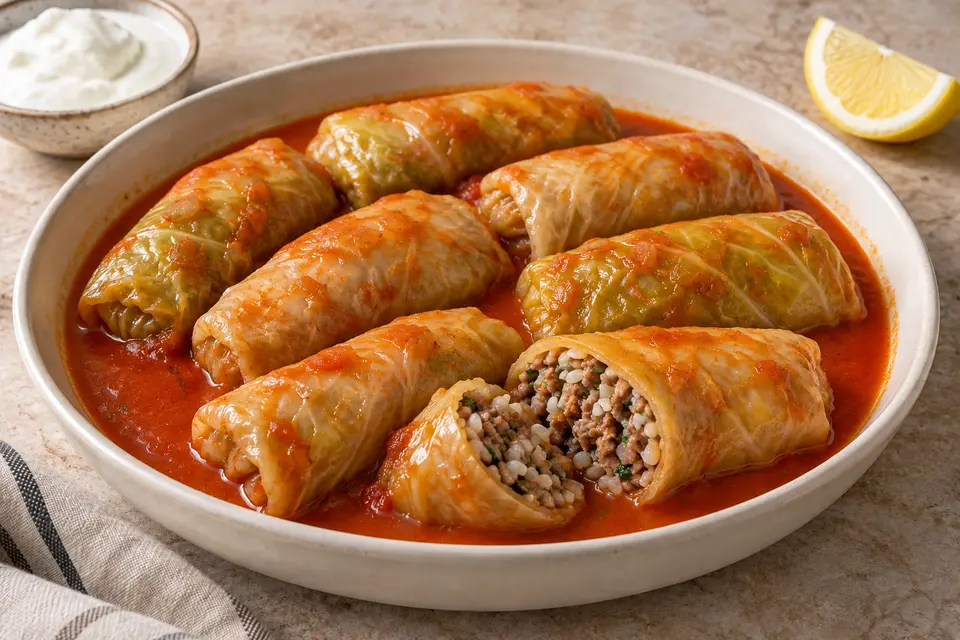
Turkish Stuffed Cabbage Rolls — Etli Lahana Sarması
Turkish cabbage rolls with beef, rice, herbs and tomato-pepper sauce
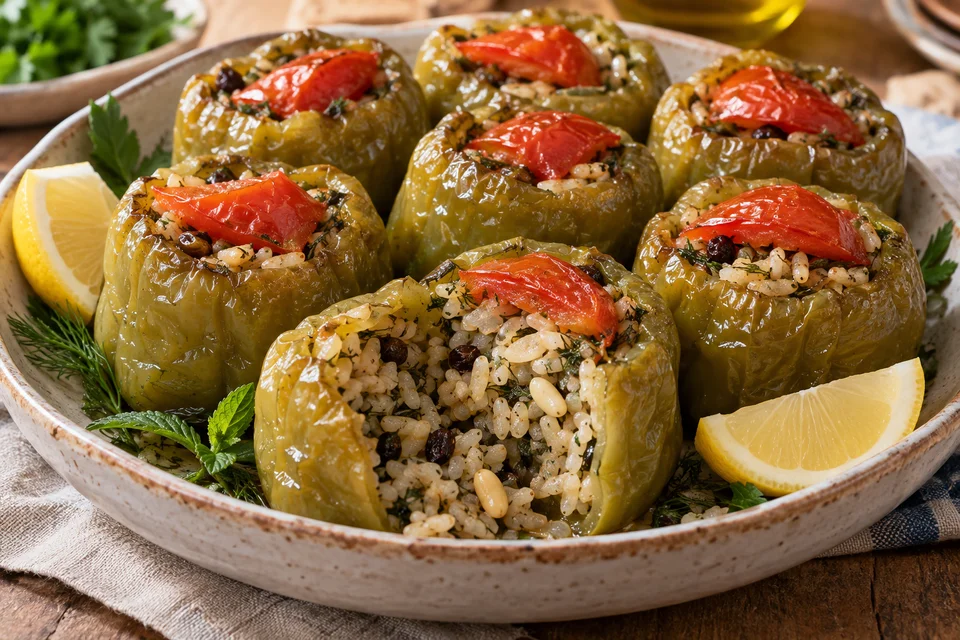
Turkish Stuffed Peppers Recipe — Zeytinyağlı Biber Dolması
Turkish rice-stuffed peppers with olive oil and herbs