Blog
Bread and Broth in Turkish Cooking: Afyon, Tirit and Banduma
Bread can do more than accompany a Turkish meal. When it receives the cooking liquid from meat or poultry, it becomes part of the dish’s structure. The important detail is not simply that bread gets wet: its thickness, crust and shape determine what the finished plate feels like. Afyon Kebabı, Kastamonu Simit Tiridi and Devrekani Hindi Banduması offer three useful ways to understand that relationship, without treating their regional names as interchangeable.
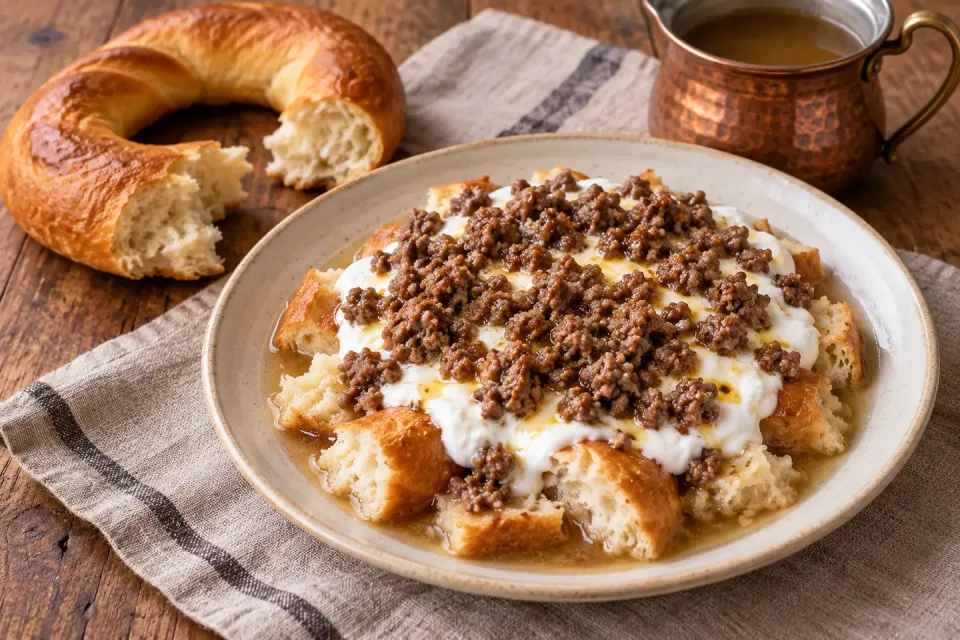
Afyon: pide with a place on the serving platter
The Culture Portal describes Afyon Kebabı as cubed beef over square-cut kebaplık pide moistened with meat broth. It associates the dish with gatherings and Ramadan. Its instruction to avoid making the pide doughy makes texture an explicit part of the regional description.
For the home cook, that is a helpful way to read the platter. Bread is neither a decorative lining nor an unlimited sponge. You should still be able to recognise separate pieces beneath the beef. A sturdy piece can receive moisture differently from a thin flatbread, so changing the bread changes the result even when the topping stays the same. This is a serving principle rather than a substitute for a complete recipe.
Kastamonu: the ring bread matters
Kastamonu Simit Tiridi uses the region’s plain, sesame-free simit with bone broth, garlic yogurt and browned mince, with butter optional in the registered description. The Culture Portal connects it with using simit that has cooled and become stale, while noting that fresh simit is also suitable.
This is a reminder to look beyond the familiar word simit. A sesame-covered ring from another bakery may be enjoyable, but it brings a different crust, flavour and surface to the plate. When shopping, ask what kind of ring bread is available rather than assuming that every simit behaves alike. If you make a substitution, describe it as an adaptation. The regional identity is clearer when the bread is named as carefully as the meat.
Devrekani: cooked yufka takes another form
The official Devrekani Hindi Banduması account describes cooked yufka rolled, cut and dipped in turkey broth, then arranged with turkey and walnuts. Butter finishes the dish. Here the starting material is a thin cooked sheet, not pide squares or a bread ring.
That difference gives a useful visual cue: look for folds and cut rolls rather than an open bread crumb. It also changes how you plan a meal. The yufka is already a substantial part of the main dish, so another large bread basket is unnecessary. Choose one preparation and let its particular shape remain visible instead of combining the toppings of all three into a supposed universal Turkish formula.
Plan the table around one substantial dish
For a practical menu, use the linked Banduma recipe as the centre and add a crisp Çoban Salatası. The salad is a pairing suggestion, not a claim about a fixed Devrekani service. The linked Tas Kebabı offers another way to explore beef cooking liquid, although it is a separate stew and should not be renamed Afyon Kebabı merely because bread is served nearby.
Assemble only the amount you intend to serve, following the chosen recipe’s handling and storage guidance. When comparing these dishes, ask three simple questions: which bread or sheet is used, which broth moistens it, and which topping completes it? Those questions preserve local differences while making the technique easier to recognise at the table. They also give bread the attention it deserves as an ingredient with its own texture.
Recipes
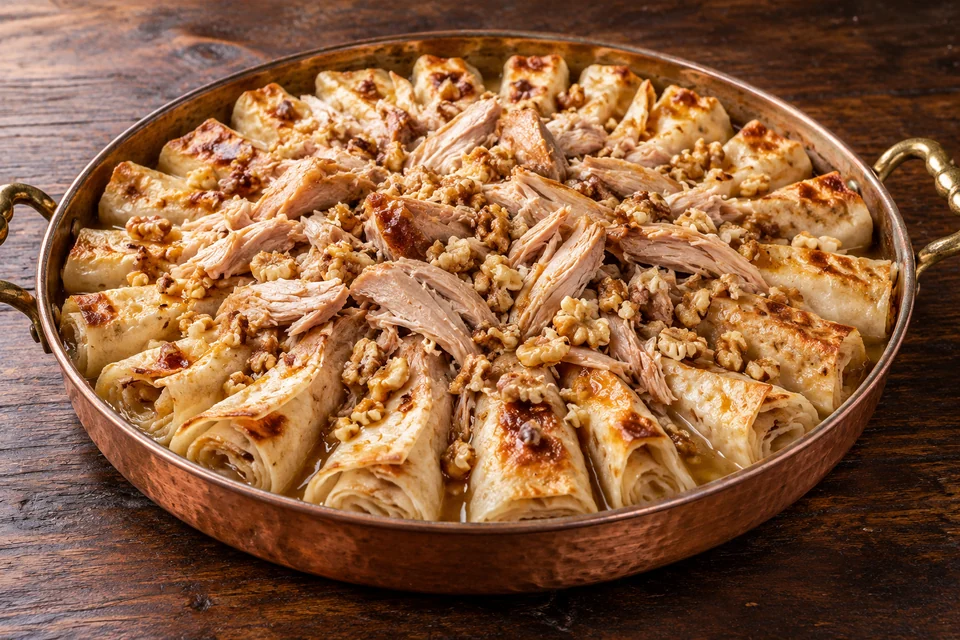
Turkish Turkey and Yufka Tray — Banduma
Kastamonu Turkey with Broth-Soaked Yufka and Walnuts
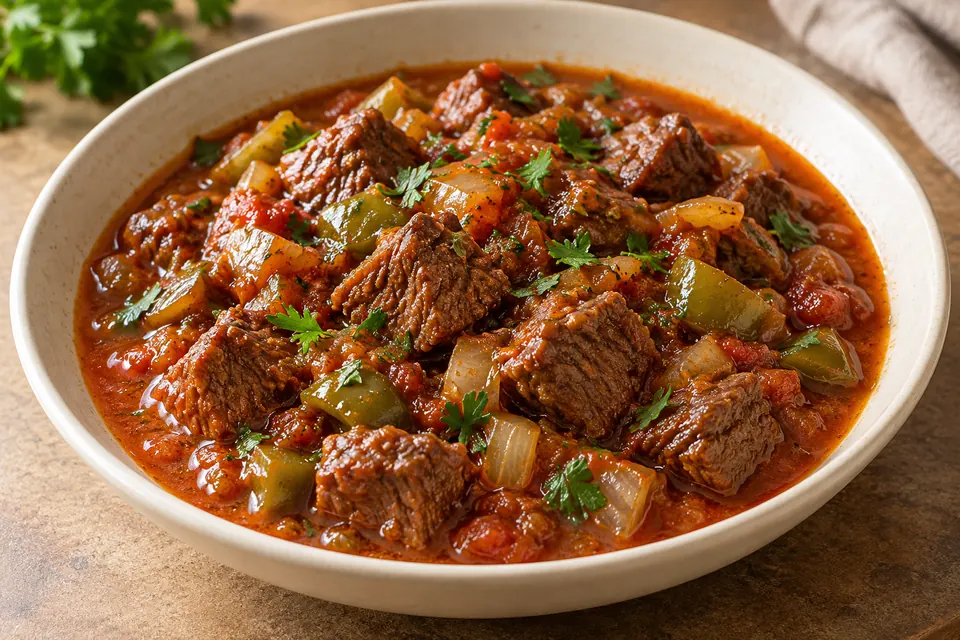
Turkish Beef Stew — Tas Kebabı
Turkish beef stew with tomatoes, onions and mild green peppers
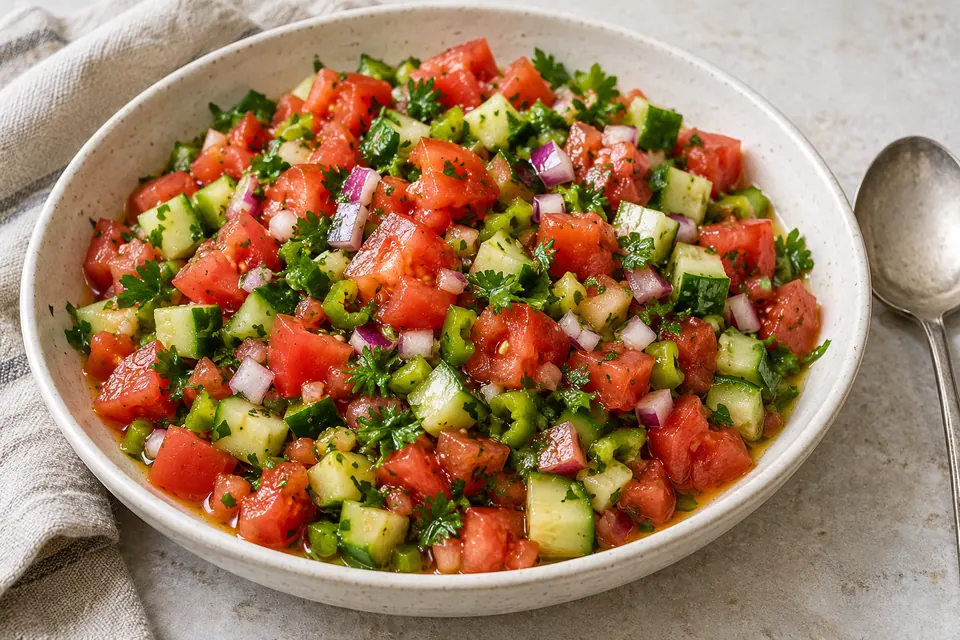
Turkish Shepherd Salad — Çoban Salatası
Turkish chopped tomato and cucumber salad