Blog
Boza in Turkish Winter Culture: İstanbul, Velimeşe and Pazaryeri
Boza belongs to the quieter pleasures of the Turkish winter table: a thick grain drink, a sweet-and-tangy taste and the crunch of roasted chickpeas. Its association with cold evenings does not make it a hot milk drink. Following it from İstanbul to Velimeşe and Pazaryeri reveals regional ingredients and serving habits that are easily lost when every bottle is described simply as a traditional winter beverage.
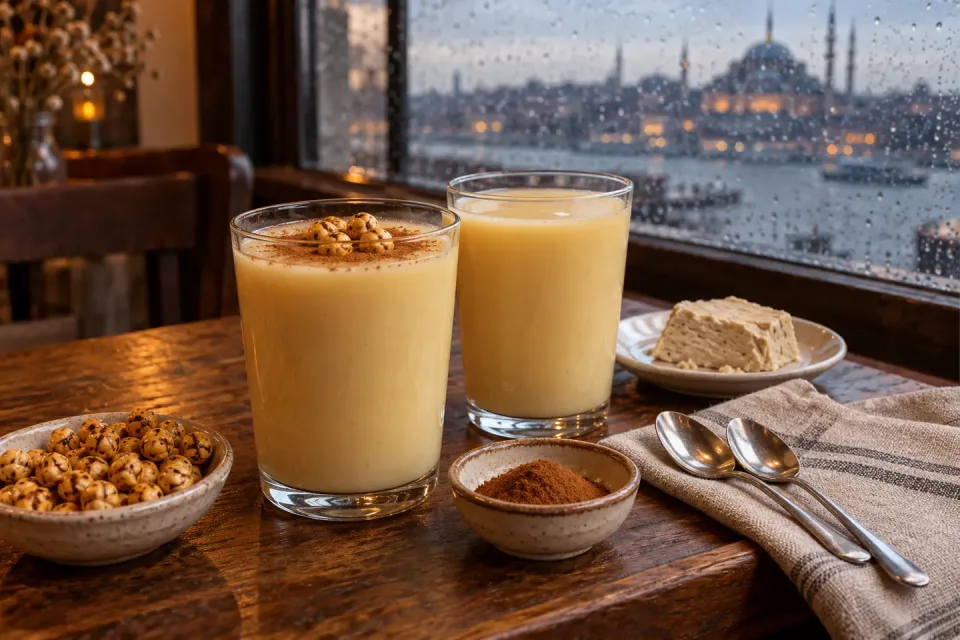
İstanbul: a drink with a street voice
GoTürkiye’s account of İstanbul’s winter food culture describes Ottoman boza houses as meeting places and recalls sellers calling through the streets at night. It also notes that the roaming-vendor tradition survives less widely today. This gives boza a social setting beyond the glass, without implying that every modern neighbourhood still hears the same evening call.
Vefa, on the Historic Peninsula near Süleymaniye, remains closely associated with boza in the city’s food guides. The familiar serving pairs its dense texture with cinnamon and yellow leblebi, or roasted chickpeas. Take a first taste plain before adding either: it makes the contrast between the drink’s gentle acidity, the spice and the dry crunch easier to appreciate.
Velimeşe: regional identity begins with grain
The Culture Portal’s account of Velimeşe Bozası identifies millet and corn as the main grains and records that some wheat flour may also be used. Its geographical-indication summary describes a thick, pale-yellow fermented drink with a sweet-sour flavour. That is a more specific identity than a single universal boza formula.
The same account connects the drink’s wider reputation with sales on trains between Edirne and İstanbul, followed by production in the Ergene and Çorlu area. This is a documented regional story, not evidence of one exclusive birthplace for every boza tradition. For shoppers, it also explains why the grain list matters: a millet-led description alone does not establish that a particular bottle is free of wheat.
Pazaryeri: another place, another accompaniment
In Bilecik, the official cultural entry places the opening of Pazaryeri’s boza season around the arrival of cooler weather in late September. It mentions cinnamon and the district’s helva as accompaniments. GoTürkiye’s Bilecik guide also describes a grain mixture and a cold serving with roasted chickpeas. These accounts show overlapping habits rather than a rule that each region uses only one garnish.
The helva distinction is useful at home. Pazaryeri’s tahini-based confection is different from spoonable semolina helva. Both belong to Turkish food culture, but substituting one for the other produces a new pairing. If you make semolina helva from the related recipe, serve it as a separate dessert and describe the choice honestly rather than presenting it as the documented Pazaryeri accompaniment.
A simple tasting table at home
Buy a clearly labelled boza from a food producer and follow its refrigeration and use-by instructions. Check the actual grain and allergen information rather than relying on the name. For this cultural introduction, a finished product lets you explore flavour and texture without improvising a fermentation method or assuming that every producer’s drink behaves identically.
Set out small glasses, teaspoons, a little cinnamon and plain roasted chickpeas separately. Begin with a modest serving, then add toppings gradually. If you want a savory contrast, a small piece of simit is a practical menu choice, not a fixed regional ritual. Leave room for the boza itself: an elaborate tray of sweets can obscure the grain flavour and acidity that make the drink distinctive. The aim is to notice a regional food carefully, not to recreate an imagined uniform winter table.
Recipes
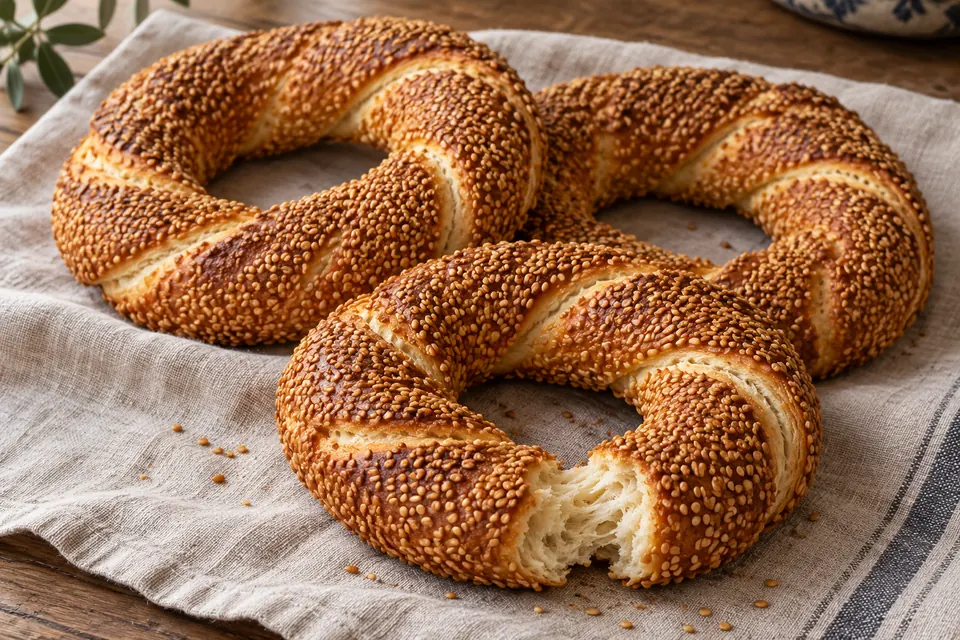
Turkish Sesame Bread Rings — Simit
Turkish twisted bread rings with grape molasses and sesame
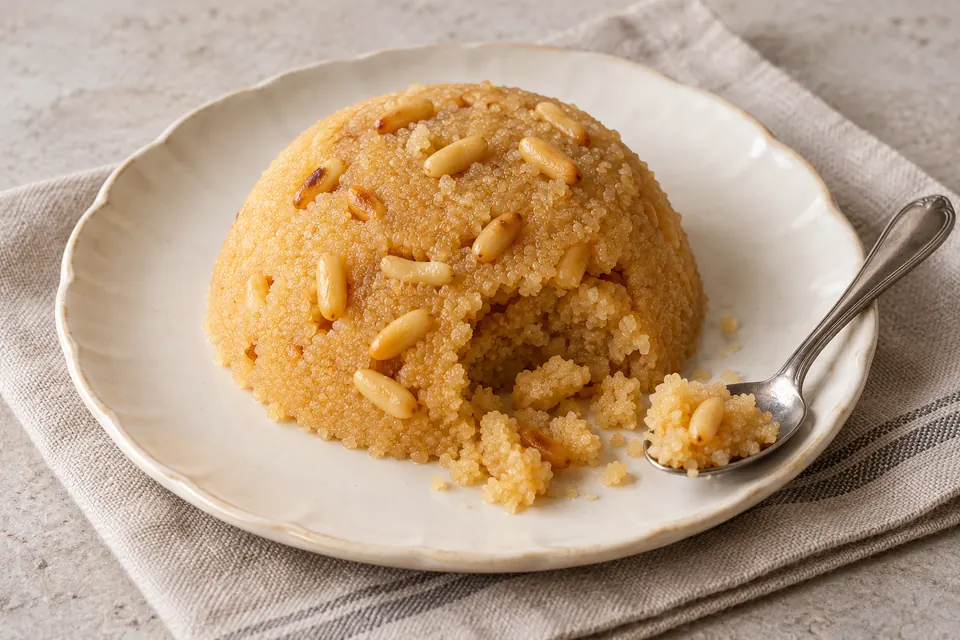
Turkish Semolina Halva — İrmik Helvası
Turkish milk-based semolina halva with pine nuts