Blog
Bici Bici, Karsambaç and Maraş Dondurması: Three Turkish Cold Desserts
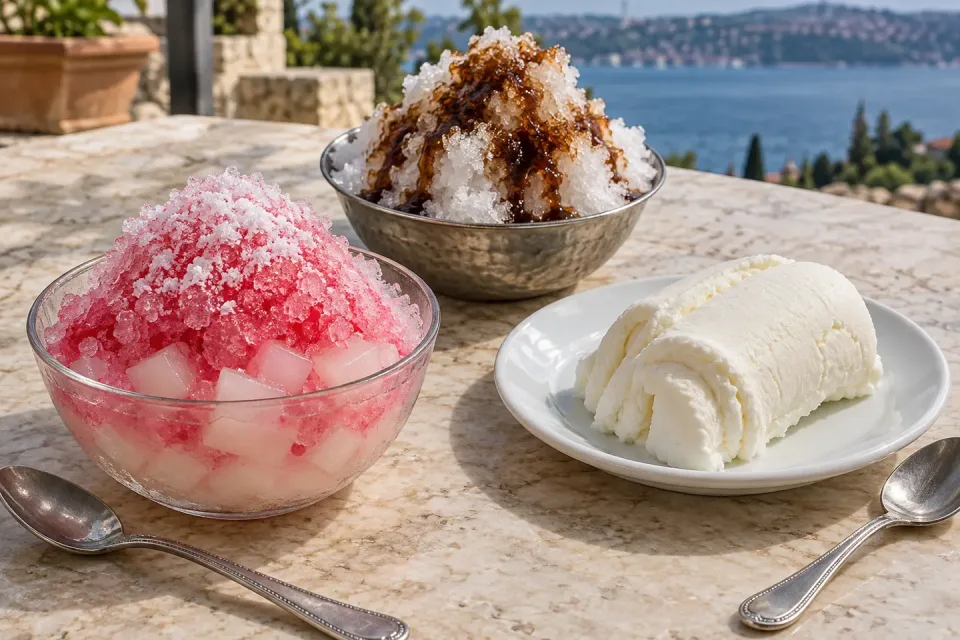
A bowl of pink shaved ice, snow-like ice darkened with pekmez and a firm white portion of dondurma can all promise relief from summer heat. Yet their ingredients and textures tell different regional stories. Looking at Adana, the highlands of Mersin and Kahramanmaraş gives a clearer picture than placing every cold Turkish sweet under the heading of ice cream. These three desserts share a cold serving temperature, but they ask the spoon to do quite different things.
Adana: Bici Bici is built in layers
Bici Bici combines a cooked starch base with finely shaved ice, powdered sugar and colored water usually scented with rosewater. GoTürkiye also describes fruit-topped servings, including banana, cherry or strawberry. The essential contrast is between soft cubes below and ice that melts quickly above. Its pale starch base is made with water; the appearance of the cubes does not mean that they contain milk.
The Adana geographical indication specifies particularly fine ice and connects the dessert with the city’s hot spring and summer weather. It also records the name as an echo of the sound made when the starch is squeezed between the fingers. That documented explanation is more useful than inventing a literal translation. GoTürkiye’s summer guide traces a change in setting too: once associated mainly with street vendors, Bici Bici is also served in cafés and restaurants.
Mersin: karsambaç gives the ice the leading role
GoTürkiye describes karsambaç as grated ice or snow dressed with pekmez, honey or sugar syrup, and identifies highland places such as Çamlıyayla as important settings for it. Here the sweet topping meets the ice directly. Unlike Bici Bici, the basic description does not include a separate layer of cooked starch cubes. A dark spoonful of pekmez and a floral rosewater liquid therefore produce distinct desserts, even when both start with fine ice.
The reference to snow belongs to the regional account. For a home interpretation, choose ice made from drinking water rather than collected outdoor snow. The useful lesson is structural: a small amount of topping changes flavor while the ice supplies the main texture. Serve a modest portion promptly, before melting turns the contrast between crystals and syrup into a uniform liquid.
Kahramanmaraş: a dense dairy texture
Maraş Dondurması has a different foundation. The Culture Portal’s geographical indication account names local goat’s milk, salep and sugar, and emphasizes the skill needed to work the mixture. Its defining qualities include a bright white appearance and a dense, elastic texture with some chew. This is a cohesive frozen dairy dessert rather than a mound of separate ice crystals with a topping.
The same source tells an origin story linking dondurma with karsambaç, but explicitly presents it as a legend. It should be read as an account of how the food is remembered, not as proof of a single inventor or a settled timeline. Comparing the finished textures explains the distinction more reliably: fine ice melts apart, while Maraş dondurması offers resistance and a unified, stretchy body.
Bringing the distinction to your table
For a practical introduction, follow the site’s Adana Bici Bici recipe and notice the separate starch, syrup and ice components. It offers a way to understand assembly as part of the dessert’s identity. Prepare the components as directed and put them together at serving time; the bowl changes rapidly once the syrup reaches the ice.
Choose one cold dessert to finish a meal rather than treating all three as interchangeable additions. If you want a savory cold accompaniment during the meal, the site’s Ayran recipe offers a different role: diluted, salted yogurt served as a drink. Sweetness, dairy, ice texture and serving purpose are separate choices. Keeping the regional names attached to those choices makes the table both easier to plan and more informative.
Recipes
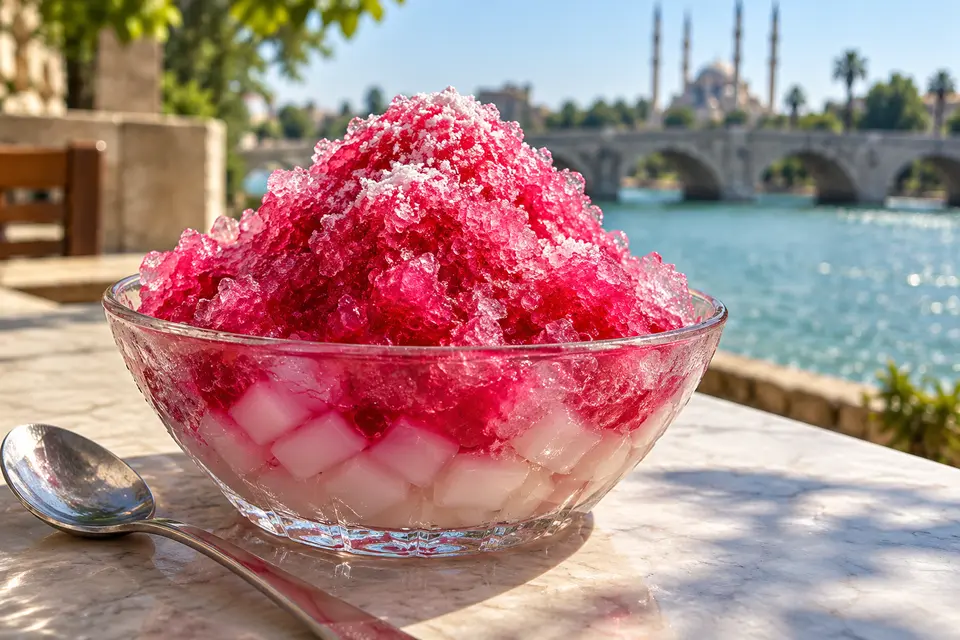
Adana Bici Bici — Rosewater Shaved Ice
Adana rosewater shaved ice with starch pudding
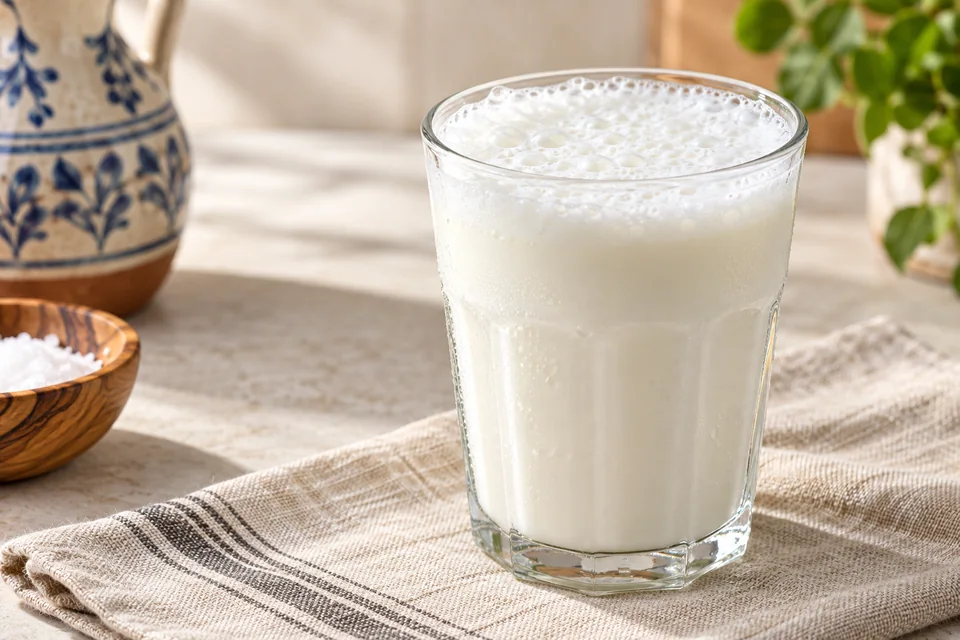
Turkish Yogurt Drink Recipe — Ayran
A cold, savory Turkish yogurt drink