Blog
Almonds in Turkish Food Culture: Edirne, Mardin and Datça
An almond can remain a whole nut, disappear into a finely ground paste or sit beneath a crisp sugar shell. Those differences make a useful starting point for exploring Turkish almond foods. Edirne, Mardin and Datça offer three distinct perspectives: a named confection, a coated sweet and a regional range of almond products. Looking at what happens to the nut tells you more than treating every almond sweet as marzipan.
Edirne: the almond becomes the sweet
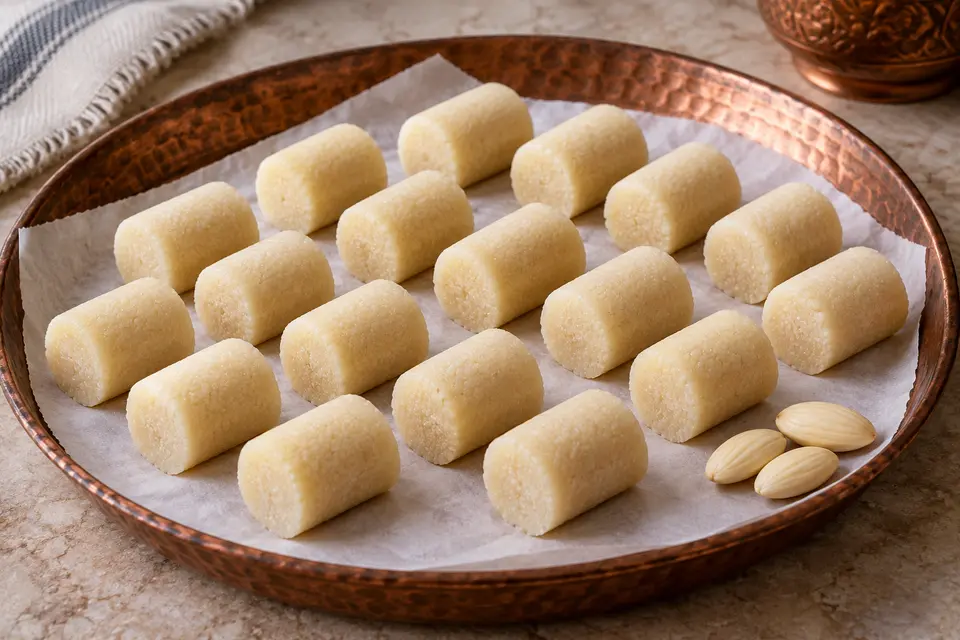
The registered Edirne Badem Ezmesi uses local Hacı Alibey almonds ground into paste and shaped into pale cylinders. Its geographical indication, registered in 2021, specifies the almond variety and production within Edirne. The Culture Portal also presents it as a popular edible gift. These references document a particular regional identity without settling the worldwide origins of almond paste.
The word ezme helps explain what to expect: the nut has been worked into the body of the confection. A cut piece therefore reveals almond paste throughout, rather than a whole kernel at its centre. For home cooking, the related Edirne Badem Ezmesi recipe provides a complete method. Read that method as a whole; replacing one syrup process with another can change the texture even when the ingredient names look similar.
Mardin: a whole almond under a coating
Mardin's Culture Portal describes badem şekeri in colours including blue and brown, with single and double sugar coatings. This is a different structure from Edirne's ground paste. Here the relationship between kernel and coating matters, and asking about the coating gives a more useful answer than assuming every coloured almond has identical sweetness.
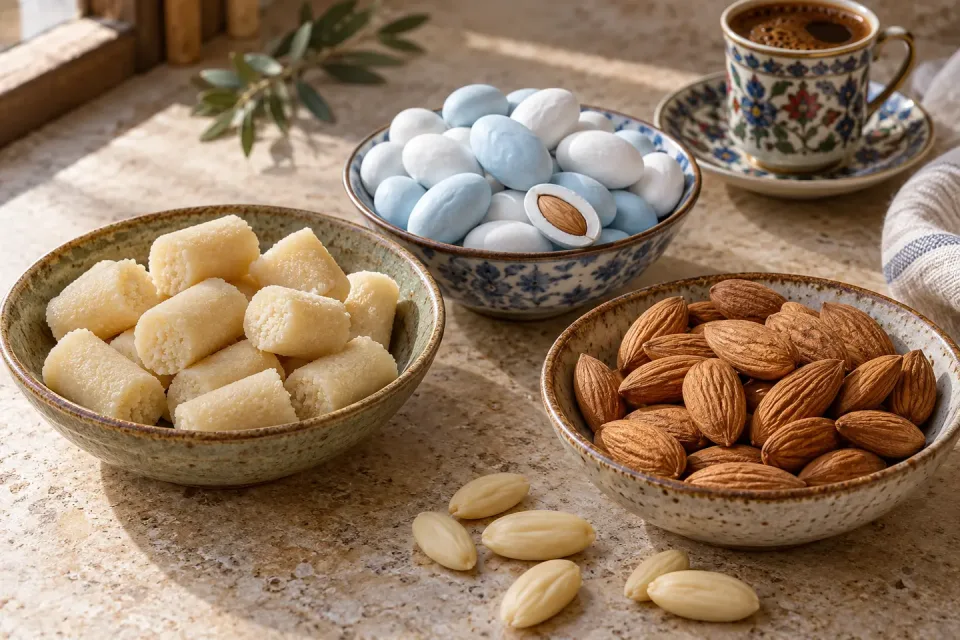
When comparing the two, look first, then taste. Notice the outline of a coated almond and the cut face of a paste cylinder. Keep each product in a separate dish so the names remain clear. The comparison is an invitation to observe texture, not a ranking of which region makes the better sweet.
Datça: start with the almond itself
The Muğla Culture Portal lists Datça almond varieties and products, including Nurlu almonds, roasted almonds, almond-filled figs and almonds with honey. Its range shifts attention from a single confection to an ingredient presented in several forms. A place name on a display can refer to the almond's provenance, a local preparation or both; ask which is meant.
For shopping, decide whether you want plain nuts to cook with or a finished sweet to serve. Check whether a product is raw, roasted, sweetened or combined with fruit before putting it into a recipe. A honeyed almond and a plain almond may share a kernel, but they do different jobs in a kitchen.
Build a small, clearly named tasting
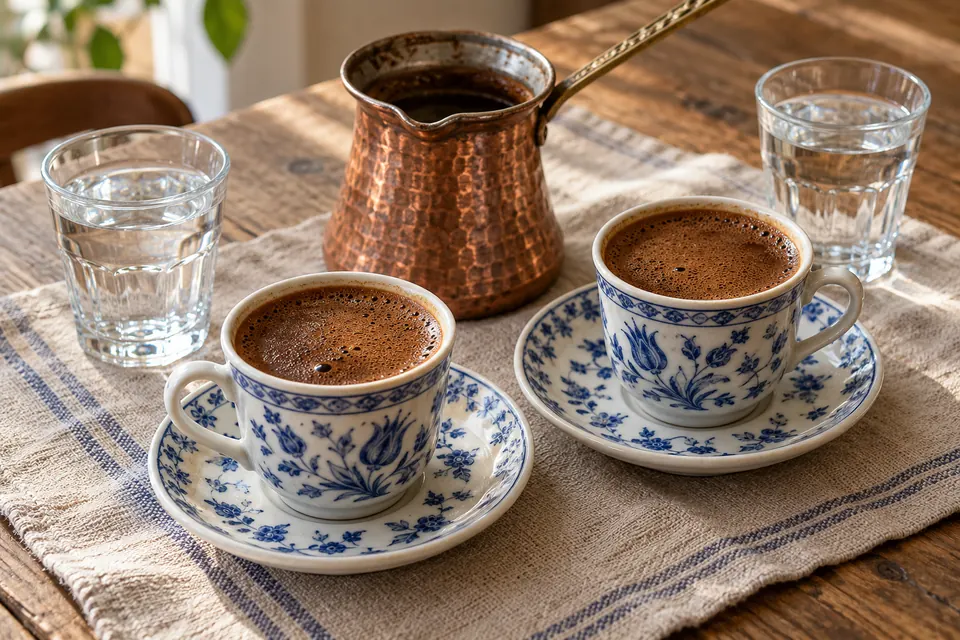
For a simple home comparison, offer a few pieces of almond paste, a small bowl of coated almonds and plain almonds alongside the linked Turkish coffee. This is a suggested tasting arrangement, not a fixed custom shared by all three places. Small portions leave room to notice the nut, the coating and the texture without making sweetness the only point of comparison.
Keep packaging available for ingredient questions, especially where nuts or other allergens matter. Use separate serving utensils and follow each product's own storage guidance. Introduce the regional names before using a broad English word such as candy or marzipan. That small act preserves useful distinctions and gives guests an easy way to describe what they would like to try again.
Recipes
Turkish Almond Paste — Edirne Badem Ezmesi
Edirne-Style Turkish Almond Paste Sweets
Turkish Coffee Recipe — Türk Kahvesi
Unfiltered Turkish coffee brewed slowly in a cezve