Blog
Understanding Zeytinyağlı: Olive-Oil Dishes on the Turkish Table
Zeytinyağlılar are not simply vegetables with olive oil poured over them. In Turkish cooking, the word names a broad family of dishes in which vegetables, pulses or stuffed leaves are gently cooked with olive oil, often alongside onion, tomato, herbs or rice. Many are allowed to cool before serving, but the details change with the ingredient, region and household. Learning the category makes a Turkish table easier to understand: one cooking idea can lead to artichokes in spring, green beans in summer or stuffed vegetables prepared throughout the year.
A category, not a single recipe
GoTürkiye describes zeytinyağlılar as an established classification within Turkish cuisine. The name literally points to olive oil, yet it also suggests a style of preparation. Onion or garlic may be softened first, a seasonal vegetable or pulse is added, and the food cooks gently with a measured amount of liquid. Tomato appears in some dishes, while lemon, dill, parsley, rice, currants or pine nuts belong to particular recipes rather than to one universal formula.
Olive oil is both the cooking medium and part of the finished sauce, so the goal is balance rather than greasiness. Covered cooking protects delicate vegetables, and a short rest allows the liquid and oil to settle around them. This pattern can be seen in official recipes for green beans, artichokes, leeks and celery root, but the category remains flexible. Not every vegetable dish in Türkiye is a zeytinyağlı, and a dish should not be assumed vegan without checking its complete ingredients and garnish.
Season, region and the olive landscape
Zeytinyağlı cooking is especially associated with western Türkiye and the Aegean and Mediterranean coasts, where olive cultivation and abundant vegetables shape local food. The Ministry of Culture and Tourism identifies both olive-oil green beans and olive-oil artichokes with the western regions. That does not confine the whole category to one coast: stuffed leaves, beans and vegetable braises appear in many local forms, and families adapt them to what grows nearby and what is available in the market.
Season still gives the table its rhythm. Artichokes and broad beans signal spring; green beans, peppers, tomatoes and eggplants suit summer; preserved vine leaves and dried pulses extend the idea through colder months. In 2023, UNESCO inscribed traditional knowledge, methods and practices concerning olive cultivation in Türkiye on the List of Intangible Cultural Heritage in Need of Urgent Safeguarding. The inscription concerns cultivation, harvesting and processing knowledge—not a list of dishes—but it underlines the agricultural skill behind the oil used in these kitchens.
How the dishes reach the table
Many zeytinyağlı dishes are cooked ahead and served cool or at room temperature. The Ministry’s versions of green beans and artichokes are cooled after cooking, and the green beans are presented as a side dish for lunch or supper. Resting also gives tender vegetables time to absorb their sauce. Even so, serving temperature is not a rigid rule for every family or every dish; some plates arrive slightly warm, especially when they form the center of a simple meal.
A zeytinyağlı can appear as a meze, a side dish or a light main course. A small table does not need six similar vegetable plates. One soft, tomato-rich dish and one brighter, herb- or lemon-led dish create more contrast. Bread, rice or a crisp salad can complete the meal according to the dishes chosen. Yogurt may be offered separately with some vegetables, but it should remain optional when the olive-oil dishes are being served as a plant-based menu.
Three recipes that show the range
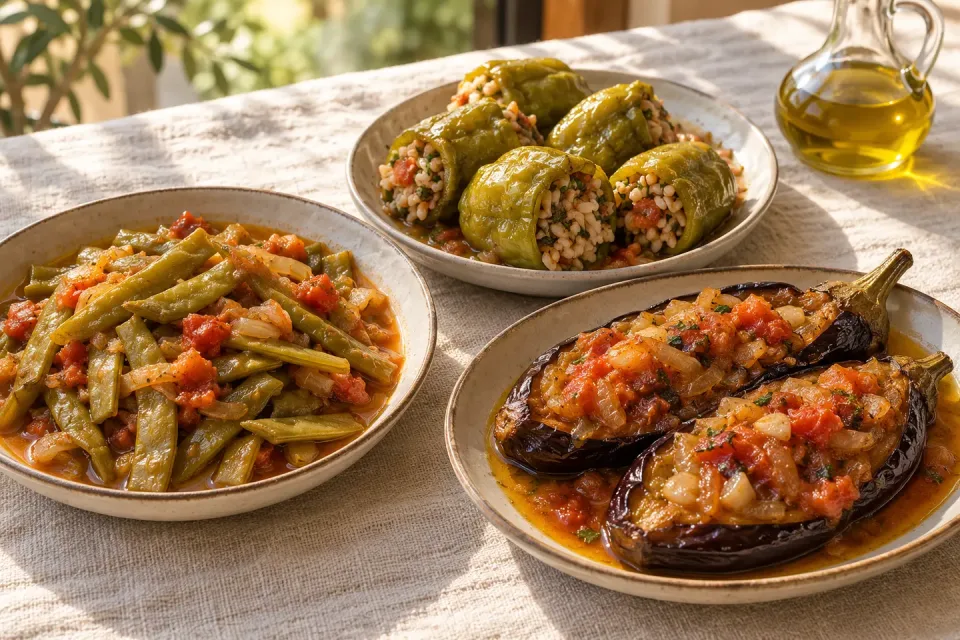
Zeytinyağlı Taze Fasulye is a clear introduction: green beans cook slowly with tomato, onion, garlic and olive oil until tender, then cool in their juices. Zeytinyağlı Biber Dolması uses the same broad tradition differently, filling peppers with a seasoned rice mixture before braising them. These two recipes show why zeytinyağlı is more useful as a family name than as a single technique with fixed ingredients.
İmam Bayıldı adds another texture. Eggplants hold a generous filling of onion, garlic and tomato, with olive oil carrying the flavors through the softened flesh. Several colorful stories try to explain the dish’s name, which means “the imam fainted,” but they are best treated as folklore rather than documented origin. Together, the three linked recipes offer a practical path into the category: beans for everyday simplicity, stuffed peppers for a composed plate and eggplant for a richer centerpiece.
Recipes
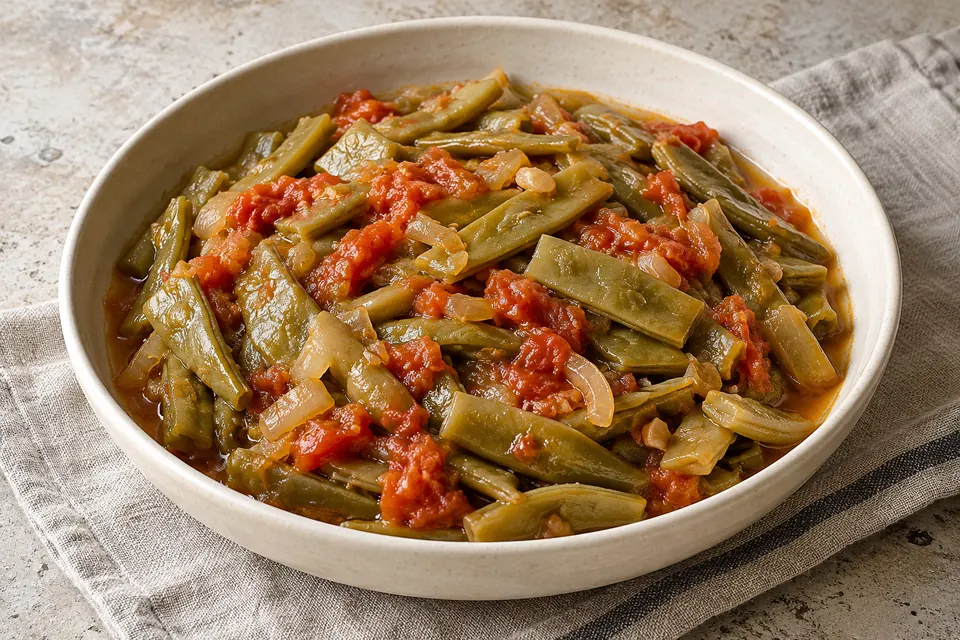
Turkish Olive-Oil Green Beans — Zeytinyağlı Taze Fasulye
Turkish green beans braised with tomatoes, onion and olive oil
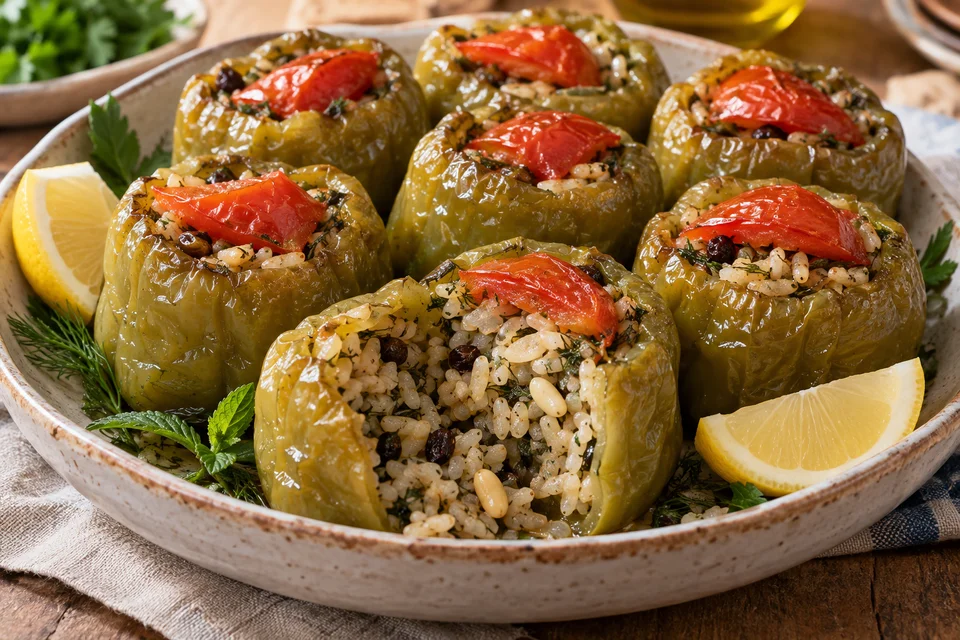
Turkish Stuffed Peppers Recipe — Zeytinyağlı Biber Dolması
Turkish rice-stuffed peppers with olive oil and herbs
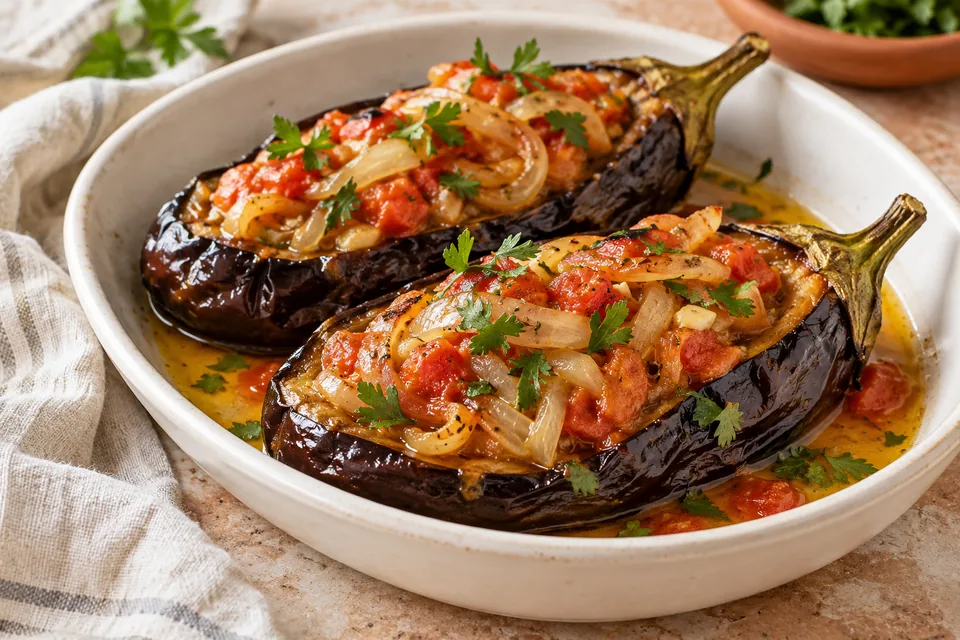
Turkish Stuffed Eggplant Recipe — İmam Bayıldı
Olive oil eggplants with tomato & onion