Blog
Tarhana in Turkish Food Culture: From Summer Fermentation to Winter Soup
Tarhana is often described as an instant soup, but that convenient label hides most of its story. Across Türkiye, families combine grain or flour with yogurt and, depending on the region, vegetables, herbs, pulses or spices. The mixture ferments, dries and becomes a pantry ingredient that can be turned into a warming meal. Its long preparation also links the abundance of late summer with the practical needs of winter.
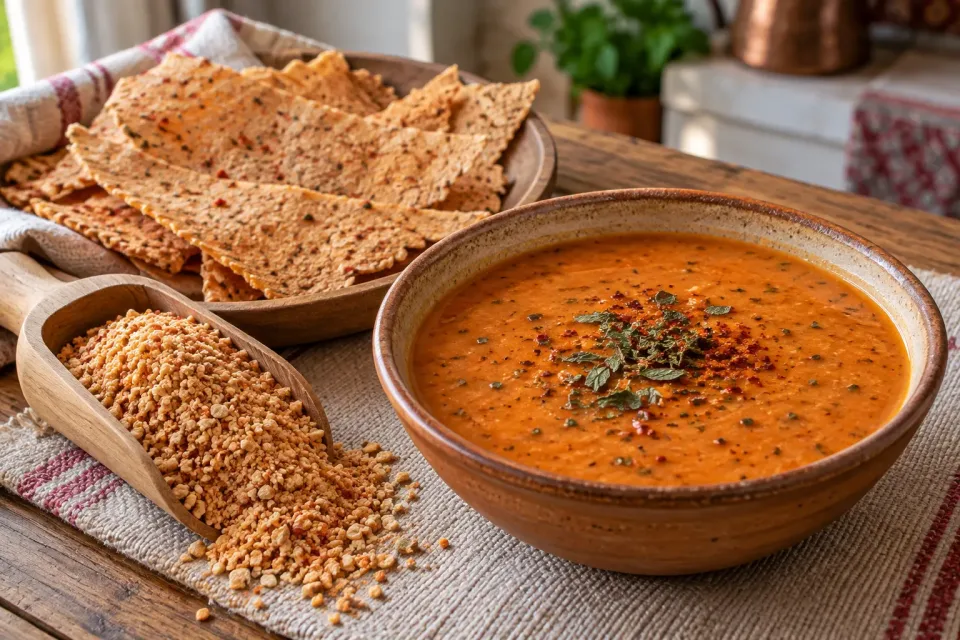
A Preserved Food, Not One Fixed Formula
The familiar powdery tarhana begins as a moist mixture rather than a spice blend. Yogurt supplies acidity and richness; wheat flour, cracked wheat or another grain gives it body. Tomato, pepper, onion, mint and other seasonings may join them. During fermentation, the mixture develops a pleasantly sour aroma. It is then divided, dried and either crumbled or milled for storage.
That broad method matters more than any universal ingredient list. Regional records show tarhana as granules, coarse pieces, compact balls and thin sheets. Some versions are made mainly for soup, while others can be eaten before they ever reach a pot. Calling every tarhana a tomato-colored powder therefore misses the variety contained in the name.
Summer Work for the Winter Pantry
Tarhana belongs to the rhythm of seasonal preservation. Vegetables are plentiful in warmer months, and dry weather makes careful drying possible. Mixing, fermenting, breaking up the dough and monitoring it as it dries take place over several days or weeks. The finished ingredient occupies far less space than the fresh foods from which it began and waits in the pantry for colder weather.
This is practical work, but it is also knowledge passed through kitchens: how sour the mixture should become, when a piece is dry enough to store and how coarse the final texture should be. Those judgments differ by household and climate. Modern refrigeration or freezing can preserve moist tarhana, yet dried tarhana remains the form most closely associated with keeping a summer preparation for winter.
Uşak, Maraş and Muğla Show the Range
Uşak Tarhanası is a protected regional product made with wheat flour, full-fat yogurt, red pepper, onion, tomato and mint. Its official specification requires at least twenty-one days of fermentation before the mixture is broken into smaller pieces and dried in the shade. The result is granular and notably pepper-forward. This is one local standard, not a timetable for every tarhana made in Türkiye.
Maraş Tarhanası follows a visibly different path. Pounded wheat is cooked first, then combined with yogurt; optional thyme and nigella may season it. The mixture is spread in thin layers on woven reed mats called çığ. It may be tasted half-dried as firik, eaten fully dried like a crisp snack, softened in broth, toasted or cooked as soup. Its sheet-like appearance is part of its identity.
Muğla records add another distinction between pale ak tarhana, based on yogurt, wheat groats and tarhana herb, and a red version enriched with pulses, sautéed onion, tomato and pepper. The pale form can become a substantial main dish, while the red soup is also associated locally with breakfast. These examples make clear why the region or producer should be named when describing tarhana.
From Dry Tarhana to the Table
For a smooth soup, follow the method for the specific tarhana you have. Fine tarhana is commonly loosened in cool liquid before heating so that it disperses without forming lumps; coarse pieces or balls may need a longer soak. Stir as the pot warms because the grain thickens quickly. Water gives a lighter result, while stock can make it more savory. Butter, dried mint, garlic or pul biber may be added according to the recipe and regional style.
Tarhana soup can open a meal, but in some homes a generous bowl is breakfast or supper by itself. Serve it with bread, pickles or a simple salad rather than burying its sour, grainy character under many toppings. Because most traditional versions contain both wheat and yogurt, check labels and recipes carefully for gluten and dairy. A different grain or plant-based yogurt is an adaptation, not an automatic one-for-one substitute for every regional tarhana.
Recipes
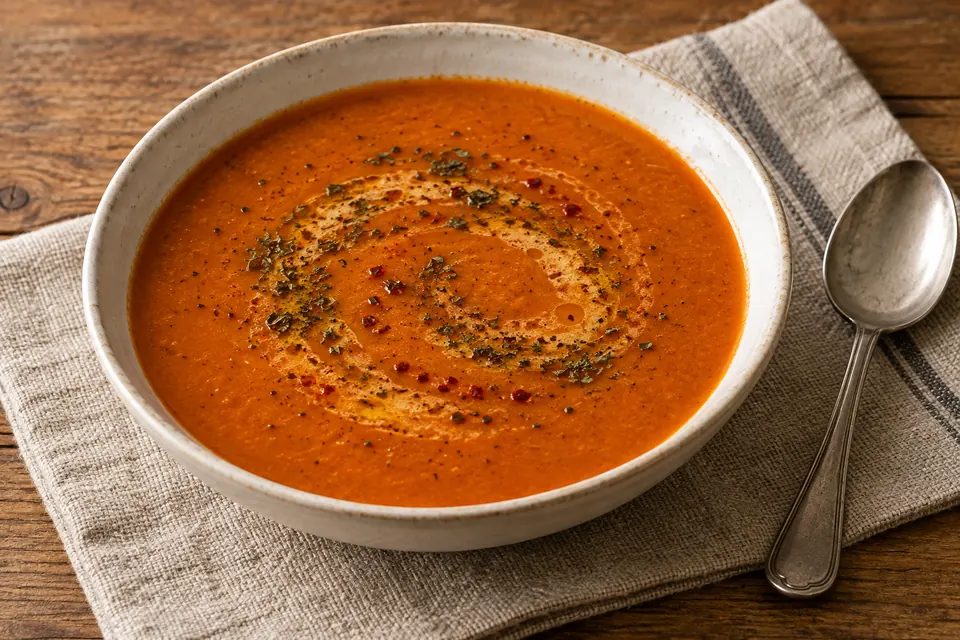
Turkish Fermented Tarhana Soup — Tarhana Çorbası
Turkish fermented tarhana soup with mint butter
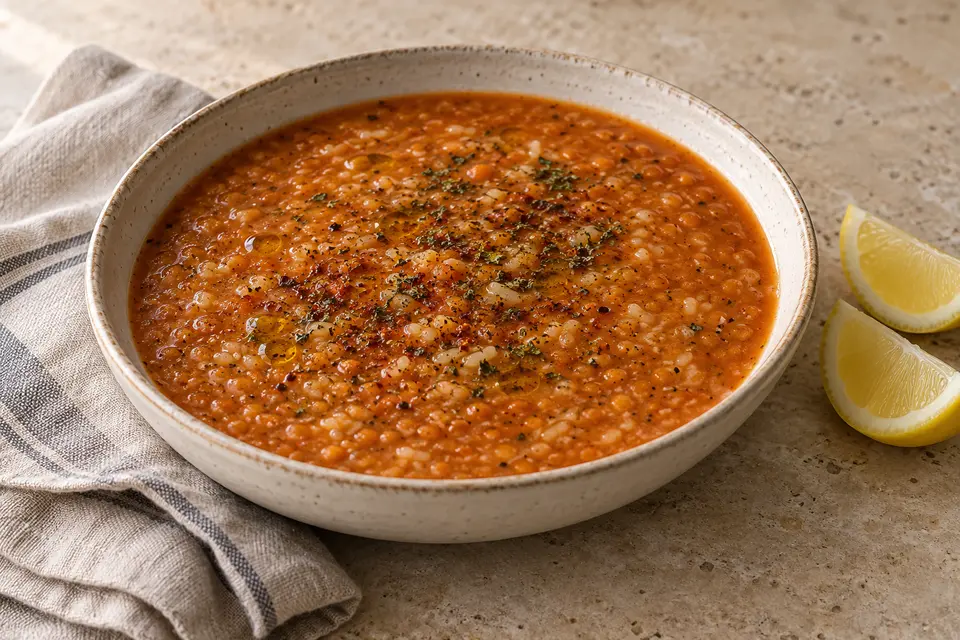
Turkish Red Lentil, Rice and Bulgur Soup — Ezogelin Çorbası
Turkish red lentil, rice and bulgur soup
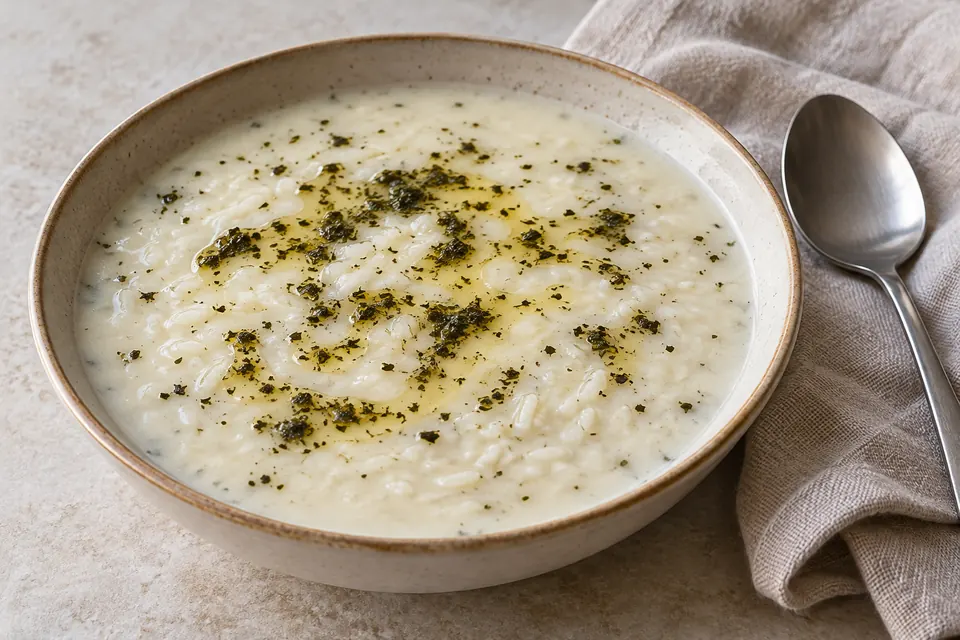
Turkish Yogurt Soup — Yayla Çorbası
Turkish yogurt soup with rice and dried mint butter