Blog
Salads at the Turkish Table: Antalya Piyaz and Spoon Salads
A Turkish salad can be a fresh accompaniment, a substantial plate or a juicy dish best gathered with a spoon. Looking at texture and regional context is more useful than expecting every bowl to play the same part. Antalya’s piyaz and Gaziantep’s chopped salads offer two different ways to understand that variety—and to choose a salad that fits the rest of a home-cooked meal.
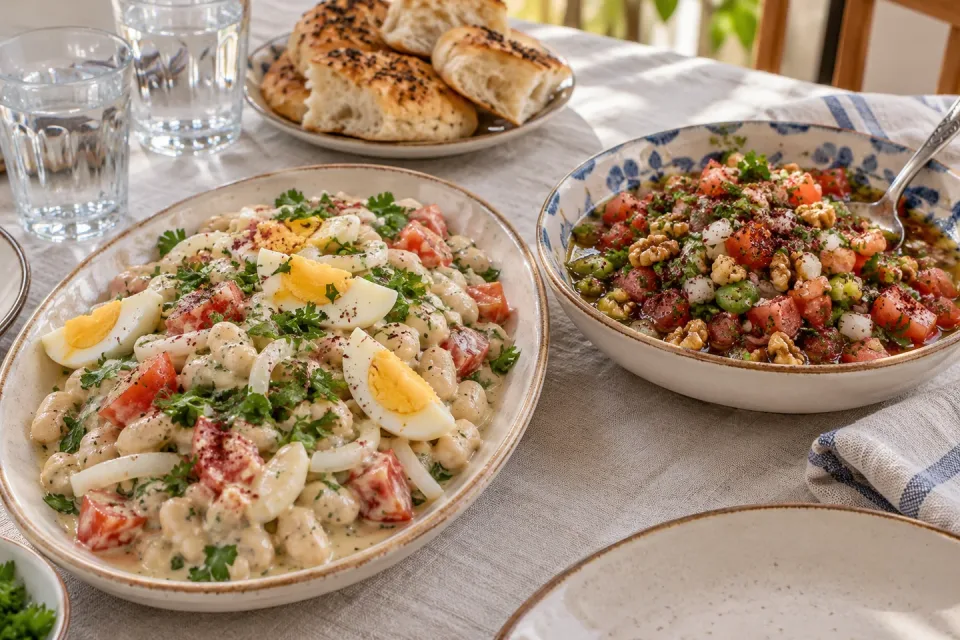
Start with the role of the salad
Before choosing ingredients, decide whether the salad will accompany a main dish or provide the center of the meal. A tomato-based bowl brings a different texture from a plate built around cooked beans. Neither needs to be treated as decoration. Give the salad its own serving utensil and enough space on the table for guests to help themselves.
The linked white-bean and shepherd-salad recipes are useful starting points, but read each version rather than relying on its name. Check the dressing, toppings and portions. A regional discussion explains why dishes differ; it does not turn every bean salad into Antalya piyaz or every chopped vegetable mixture into the same local preparation.
Antalya: beans with a distinctive dressing
The Culture Portal identifies Antalya piyaz by its small beans and tahini-based tarator dressing. Antalya’s provincial cultural record also places it beyond the role of an ordinary meze. The local name therefore describes a particular preparation, not a universal formula for piyaz throughout Türkiye.
For menu planning, look at both beans and dressing. A generously dressed plate may need little additional sauce alongside it. If you are making the linked white-bean salad, follow that recipe as written and describe it by its own ingredients. Adding tahini casually is not a substitute for following a complete Antalya-style recipe with a coherent dressing and method.
Gaziantep: a salad that welcomes a spoon
Gaziantep’s culture directorate describes finely chopped, sour, juicy salads eaten with a spoon. The cutting and liquid are part of the eating experience. Set a spoon beside such a bowl so the vegetables and dressing can be served together, rather than leaving the liquid behind.
Gavurdağı provides another point of reference: Esenler Municipality’s version combines finely cut vegetables with walnuts and notes pomegranate molasses as an addition. This example also shows why one ingredient list should not be presented as the only possible version. When serving a walnut salad, name the nuts clearly instead of assuming a vegetable dish is suitable for everyone.
Build contrast without crowding the table
For a manageable menu, choose one salad and one main dish first. The linked İnegöl köfte can be a starting point for a meat-centered meal, with a salad chosen to provide freshness or a contrasting texture. This is a practical home-menu suggestion, not a claim that every regional salad traditionally belongs beside those meatballs.
Finish by checking the complete recipes and your guests’ dietary needs. Tahini contains sesame, walnuts are tree nuts, and some piyaz presentations include egg. Bread may add wheat even when the salad itself does not. Keep serving utensils separate where needed, follow each recipe’s storage advice and dress delicate vegetables at the stage that recipe recommends. A clearly described plate is more welcoming than an impressive spread whose ingredients remain uncertain.
Recipes
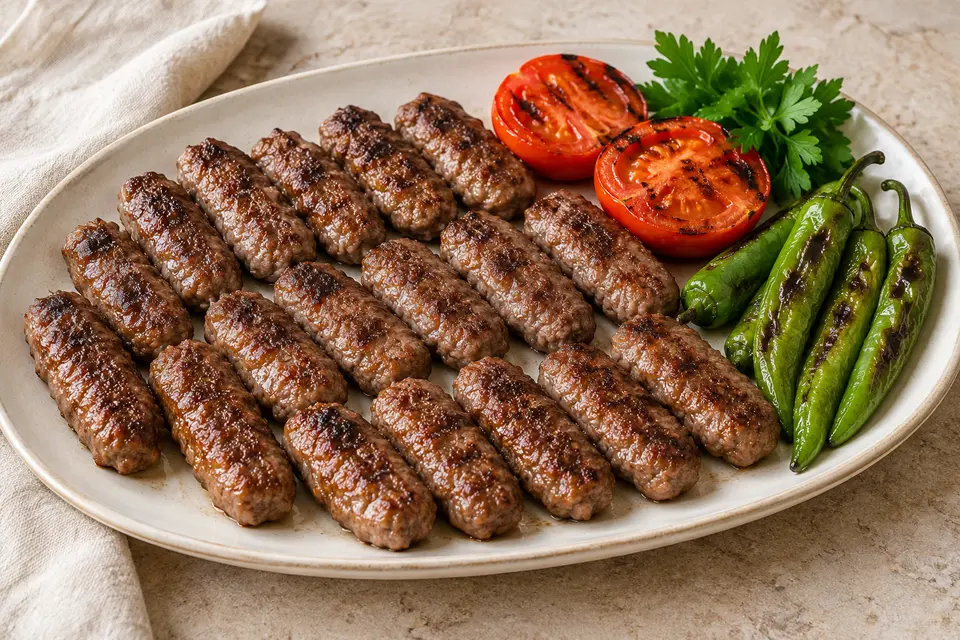
Turkish Grilled Meatballs — İnegöl Köfte
Turkish grilled beef and lamb meatballs
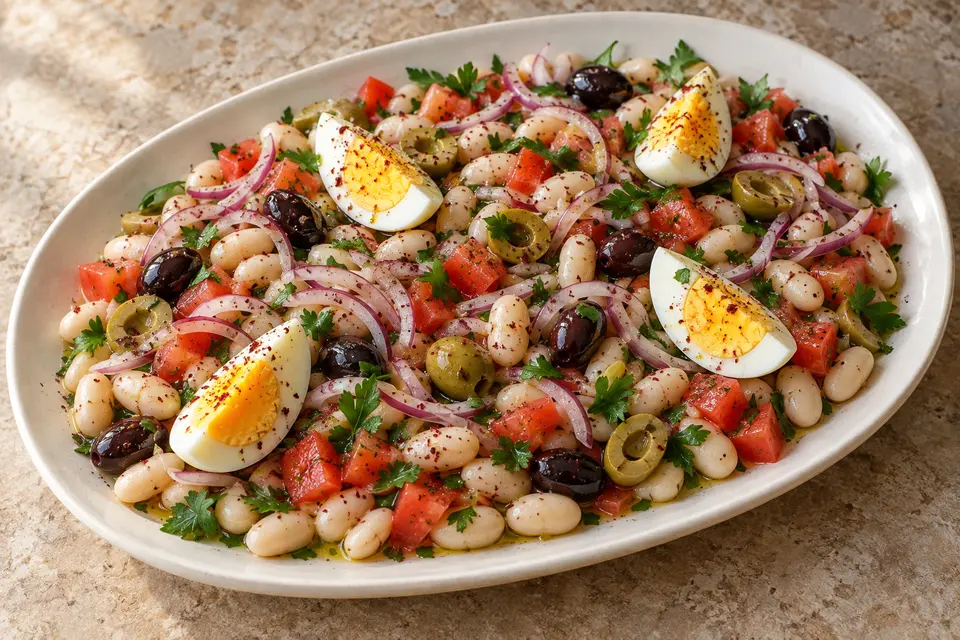
Turkish White Bean Salad — Piyaz
Turkish white bean salad with sumac onion, tomato and parsley
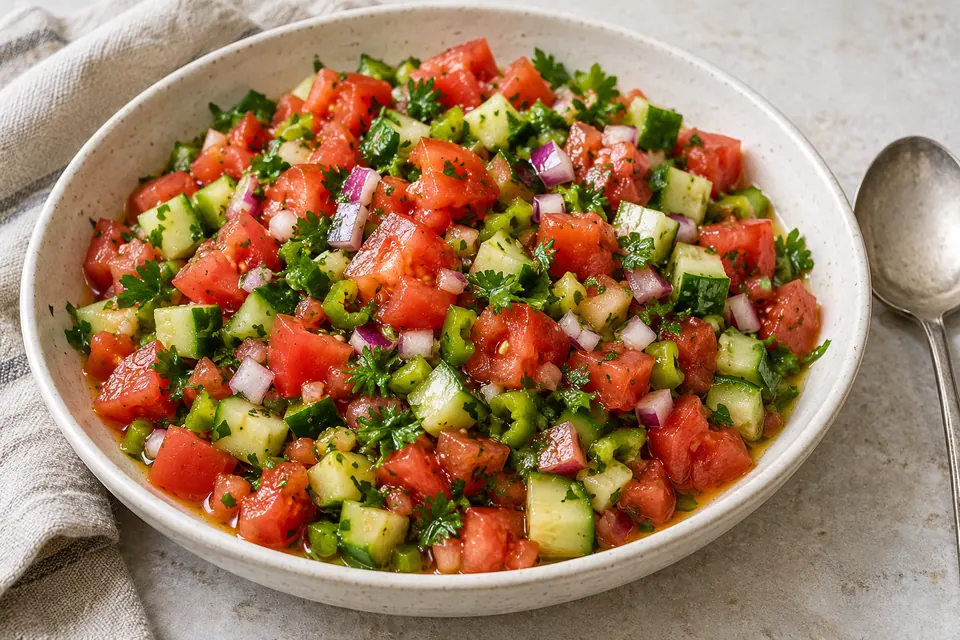
Turkish Shepherd Salad — Çoban Salatası
Turkish chopped tomato and cucumber salad