Blog
Olives at the Turkish Table: Gemlik, Domat and a Small Tasting
A small dish of olives can tell several stories at a Turkish breakfast table. There is the name of the fruit, the place associated with it and the way it has been prepared for eating. Keeping those ideas separate makes shopping more interesting and serving easier. Rather than assembling an enormous breakfast, start with two contrasting olives and give each enough space to be noticed.
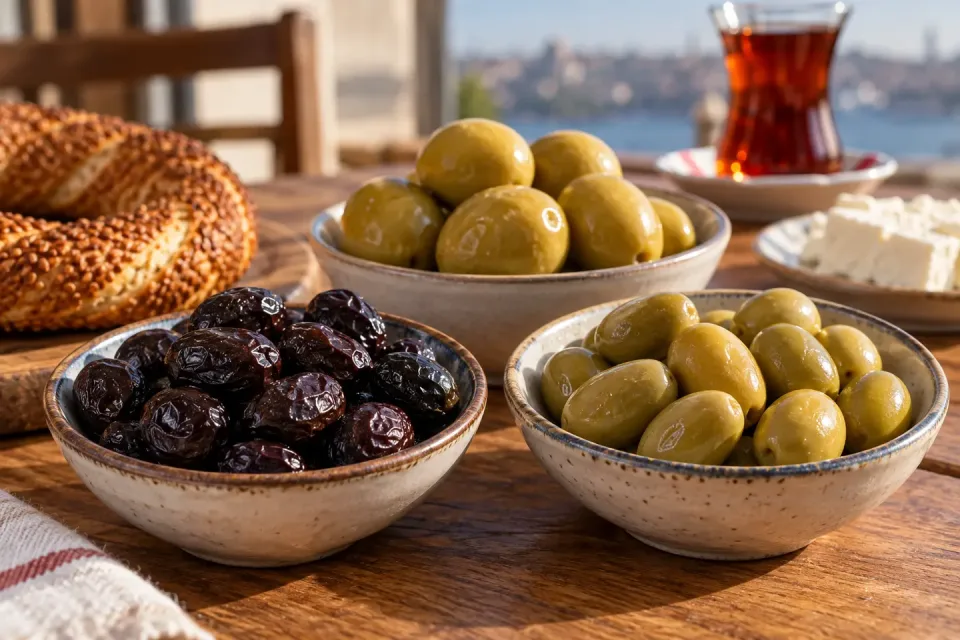
A variety name is only the beginning
GoTürkiye's olive guide describes several varieties with different table uses. Gemlik is associated with dark, oil-rich fruit, while the larger green Domat is well suited to stuffing. Memecik is another Aegean variety, described as medium-sized and slightly oval. These are useful starting points rather than promises that every packet bearing a name will taste the same.
At a shop, read beyond the largest word on the label. Look for the producer, origin and preparation information. Whole, pitted and stuffed olives offer different eating experiences, even when the variety is shared. For an introductory tasting, choose unstuffed examples: a filling can be delicious, but it adds another flavour and makes the fruit itself harder to compare.
Gemlik and the language of curing
The Gemlik Chamber of Commerce and Industry places the olive in the Gemlik and Zeytinbağı area and describes its role as a breakfast olive. Its account records several preparations, including brine-based and sele methods. This local perspective matters because a regional olive is more than a colour category: preparation changes the texture and the way the flesh meets the stone.
Treat words such as salamura and sele as prompts to ask how a particular product was prepared, rather than as a universal guarantee of saltiness or softness. Producers and products vary. Compare a wrinkled olive with a smoother one and notice the bite, firmness and lingering flavour. Keep the packaging so that a favourite can be found again; memory alone is a poor substitute for a producer's details.
The table is connected to the grove
GoTürkiye's Olive Tree Route connects groves, presses and museums along the Aegean. It highlights the Adatepe Olive Oil Museum near Ayvacık and identifies Ayvalık as an important cultivation centre. These places make the link between fruit and oil visible without turning them into the same product. An olive chosen for breakfast and oil poured over vegetables can belong to a related landscape but have different jobs.
That distinction also helps at home. Taste the table olives first on their own, then decide whether an extra dressing is useful. Avoid covering every bowl with the same lemon, herbs or oil before anyone has tried it. A simple presentation lets the preparation speak. It also leaves room to discuss where the olives came from instead of reducing the whole selection to green versus black.
Build a modest breakfast comparison
Set out two small bowls, one dark and one green, with a separate dish for stones and a serving spoon for each. Add the linked simit, a little white cheese and tea if you like. This is a practical home menu suggestion, not a rule followed by every Turkish household. Keep the first tasting plain, then try a bite with bread and notice how the balance changes.
Olive culture also continues beyond breakfast. The linked olive-oil green beans offer a separate way to explore the ingredient's place in a meal; they are not a dish made from table olives. Follow each packet's directions after opening, use clean serving utensils and keep unused olives in their original recommended storage conditions. A thoughtful small selection is enough to make variety, preparation and place part of the conversation.
Recipes
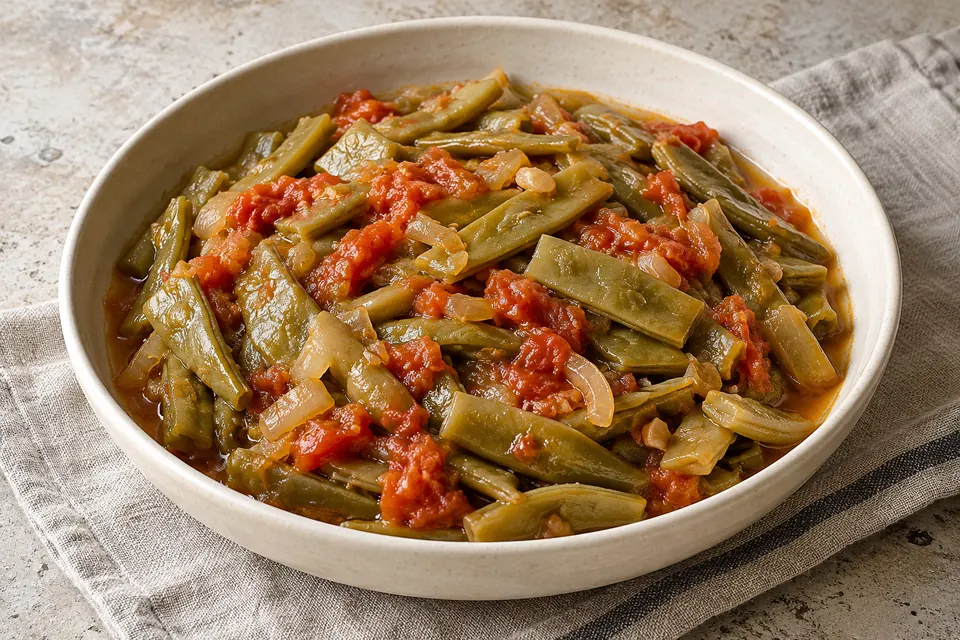
Turkish Olive-Oil Green Beans — Zeytinyağlı Taze Fasulye
Turkish green beans braised with tomatoes, onion and olive oil
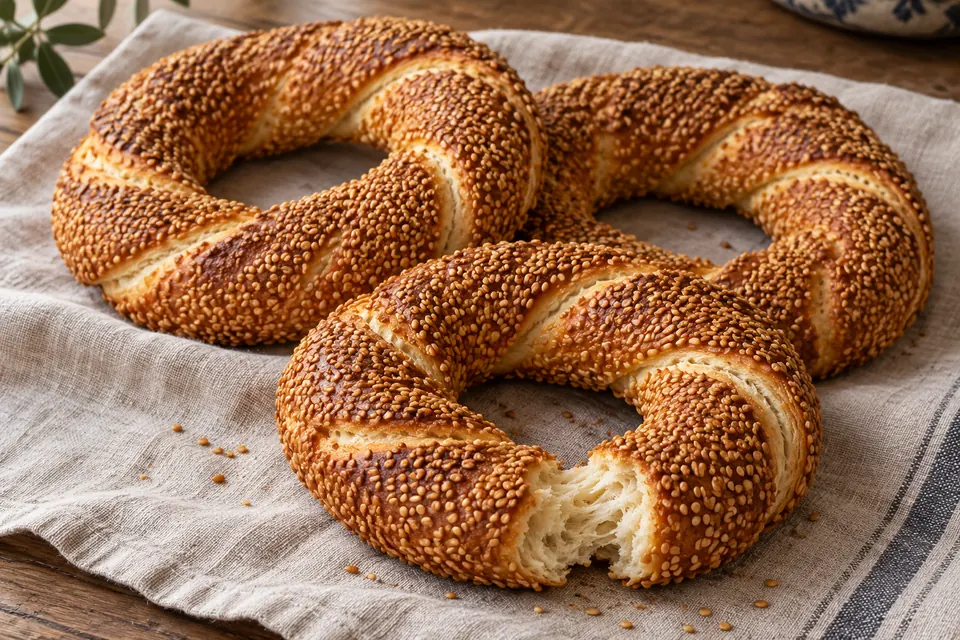
Turkish Sesame Bread Rings — Simit
Turkish twisted bread rings with grape molasses and sesame