Blog
Lentils in Turkish Cooking: Red, Green and Regional Textures
A bag of mercimek can lead to very different dishes on a Turkish table. Lentils may become a soft soup, hold together a hand-shaped bulgur mixture or remain distinct beside noodles. Understanding those textures makes the pantry easier to navigate than treating every lentil dish as a variation on the same bowl. Colour is a useful starting point, but the finished dish tells the fuller story.
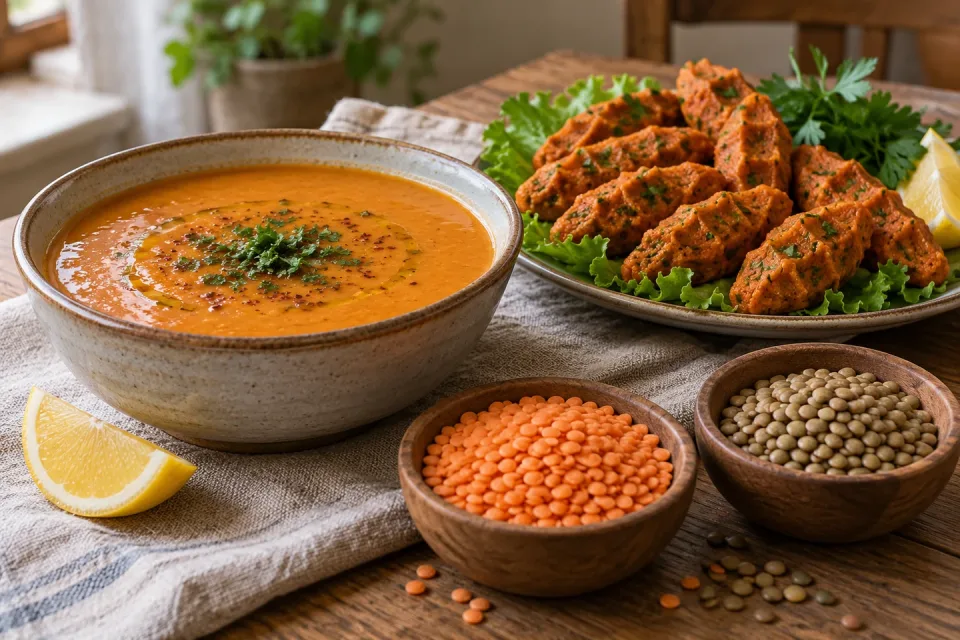
Red lentils and the appeal of a soft texture
Kırmızı mercimek means red lentils. In the Ministry of Culture and Tourism’s simple soup example, they cook with onion and paprika until very soft. The interest lies in a small group of ingredients becoming a coherent spoonful. A smooth-looking soup need not depend on cream, although the exact fat, stock and thickener vary between recipes.
For a home menu, choose the site’s Mercimek Çorbası when you want a gentle opening course rather than another heavily textured dish. Bread can provide the contrast. Keep the description precise: a lentil soup made with butter or meat stock is different from one prepared entirely with plant ingredients, even when both look similar in the bowl.
Ezogelin: lentils sharing the pot with grain
Ezogelin offers another way to read the same pantry ingredient. The ministry’s version combines red lentils with bulgur and a finish of tomato paste, mint and pepper, served with lemon. It identifies the soup with southeastern Anatolia while noting its preparation throughout the country. That is a more useful context than assuming one household formula represents every region.
The grain changes the eating experience: instead of seeking only a soft lentil base, look for the relationship between lentil, bulgur and seasoning. The site’s Ezogelin Çorbası includes its own ingredient balance, so follow that recipe rather than borrowing timings or quantities from a plain lentil soup. Serve either soup at one meal; there is little need to include both.
Mercimek köftesi and a regional vocabulary
Lentils also belong on a platter. Gaziantep’s registered Malhıtalı Köftesi uses red lentils and fine bulgur, locally called simit. Here simit refers to the grain, not the sesame bread ring. The regional description highlights fresh or dried tarragon as a distinguishing ingredient. This is a reminder that a familiar dish name can conceal a specific local vocabulary.
The same description records hand shaping and accompaniments such as radish, cress, pickles and ayran. Use those as an idea for contrast, not a compulsory checklist for every lentil patty. The site’s Mercimek Köftesi is a practical starting point for a shared plate, while the Gaziantep example explains why regional versions should be named and described individually.
Green lentils, noodles and choosing a balanced table
Whole green lentils create a different visual and textural centre. Afyonkarahisar’s Sakala Çarpan Çorbası brings them together with homemade erişte, onion and a mint-butter finish. Its published example includes meat stock, showing why a dish built around pulses cannot automatically be described as vegetarian. The lentils and noodles remain recognisable parts of the bowl.
When shopping, distinguish whole green lentils from red split lentils before considering substitutions. Swapping one for the other can change both the liquid needed and the final texture. For a varied Turkish meal, choose one lentil preparation, then add contrasting vegetables, bread or a yogurt accompaniment as appropriate. That gives each dish a clear role and lets a modest pantry ingredient show its range.
Recipes
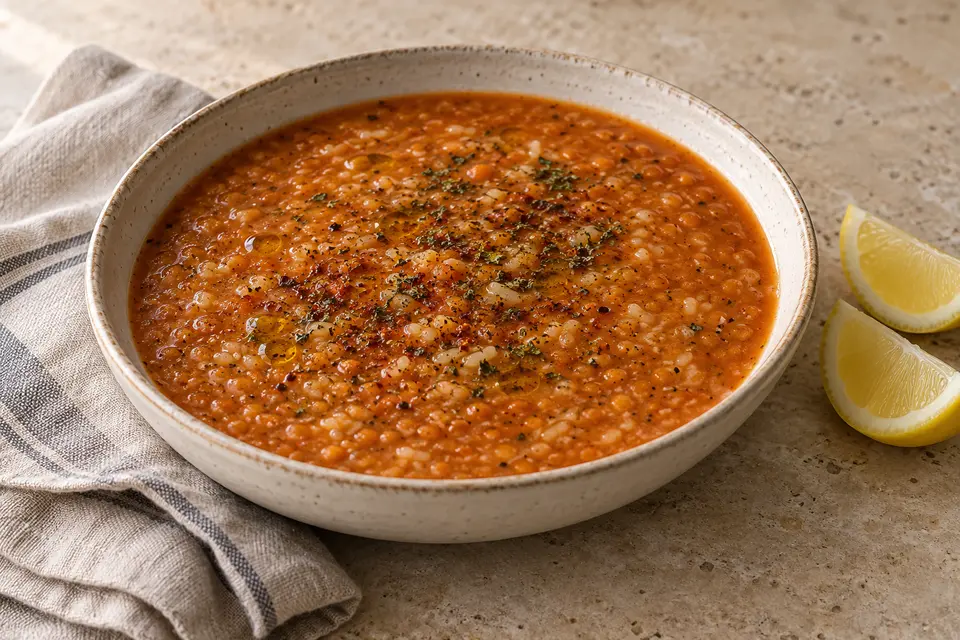
Turkish Red Lentil, Rice and Bulgur Soup — Ezogelin Çorbası
Turkish red lentil, rice and bulgur soup

Turkish Lentil Patties — Mercimek Köftesi
Turkish red lentil and bulgur patties with fresh herbs
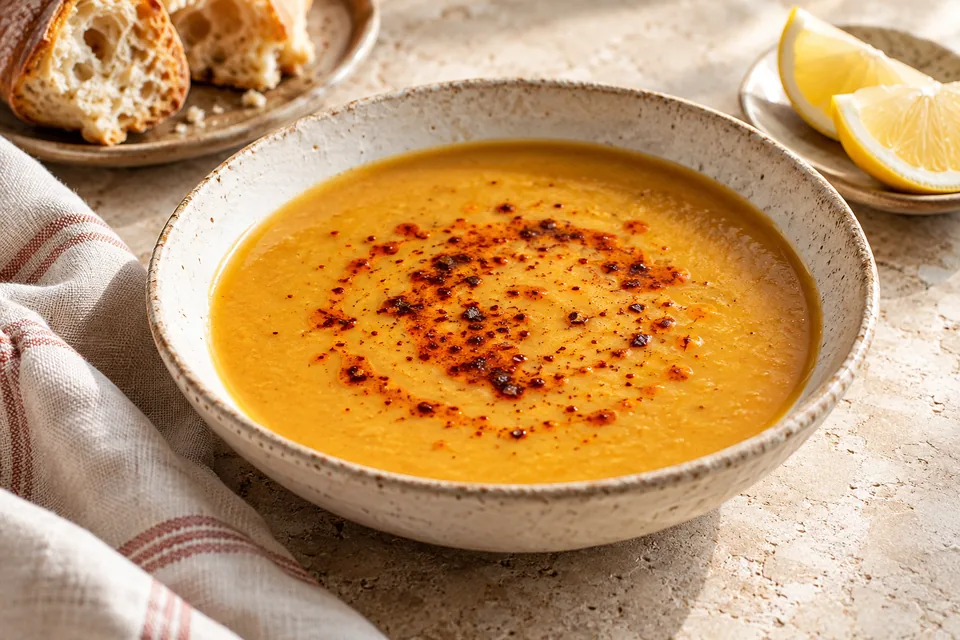
Turkish Red Lentil Soup Recipe — Mercimek Çorbası
Silky Turkish red lentil soup