Blog
Giresun Palamut Buğulama: Layers, Steam and the Table
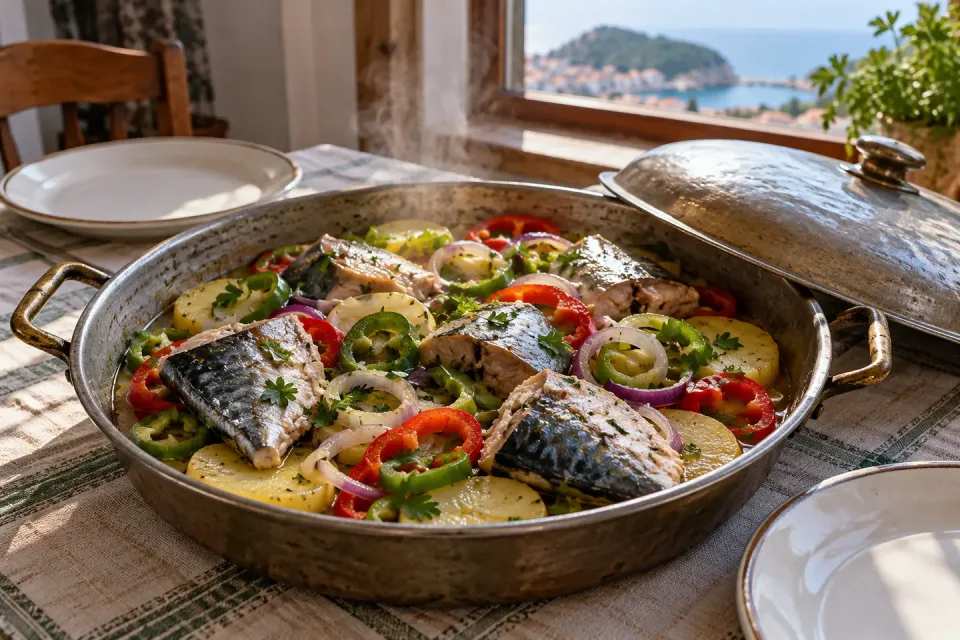
A cooking method can explain a regional dish more clearly than a long list of ingredients. Giresun’s recorded palamut buğulama is a useful example: potatoes, fish, onions, peppers and parsley enter the pan in a deliberate order, then cook beneath a lid. Reading that sequence reveals how the finished plate holds together. This is one documented Giresun preparation, rather than a rule for every Black Sea household or every dish called buğulama.
Start with the regional record
The Ministry of Culture and Tourism’s account, credited to the Giresun provincial archive, uses palamut with potatoes, yellow and red onions, çarliston and kapya peppers, parsley, olive oil and butter. Garlic is optional. A small amount of warm water goes into the covered pot before low-heat cooking.
That description gives a concrete identity to the dish. It does not include tomato or lemon, so adding either would be a personal variation on this particular account. A useful introduction at the table is therefore specific: Giresun-style bonito with a potato base and sweet peppers. The regional name tells guests which version you chose without claiming that other preparations are wrong.
Why the layers matter
The recorded method begins by oiling the pot and arranging potato rounds that are not cut too thinly. Cleaned, deboned fish pieces follow, then onion rings, pepper rings and coarsely chopped parsley. Oil, small pieces of butter, seasoning and warm water complete the assembly.
For a home cook, the order offers a way to think about texture. The potato forms a substantial base while the vegetables and fish share the cooking liquid. The lid and gentle heat are central features of the documented method. Stirring a pan assembled this way would disturb its structure; lifting a serving from the bottom helps carry the different layers onto one plate. That serving suggestion follows the dish’s construction rather than a claimed ceremonial custom.
Read the plate before planning the rest
This is already a combination of fish and vegetables, with potatoes providing substance. A meal does not need a second rich starch simply because the main dish is fish. For a practical home menu, keep accompanying dishes small and let the pan remain the focus.
Our Giresun Palamut Buğulama recipe provides measured quantities and cooking guidance. The Hamsi Buğulama recipe offers a second fish preparation to explore on another occasion. Read the actual ingredient lists rather than assuming that the shared word guarantees identical vegetables, seasoning or cooking time. The recipes are useful companions to this article, while the cultural discussion explains what to notice in the regional record.
A name is a starting point
When discussing buğulama, ask which fish is used, what sits underneath it and whether the pan cooks covered on the stove or follows another method. These questions make a menu description useful. They also leave room for family preferences without turning a single archived recipe into a universal definition.
At home, bring the cooked fish to the table in its serving pan if that suits your space, set the lid safely aside and portion carefully. Explain the vegetables and mention the butter when guests ask about ingredients. Fish bones still deserve attention even when the recipe begins with deboned pieces. Follow the selected recipe for safe cooking and storage; a cultural overview cannot replace those instructions. The pleasure of this preparation lies in recognizing a complete arrangement, with each layer contributing to the same meal.
Recipes
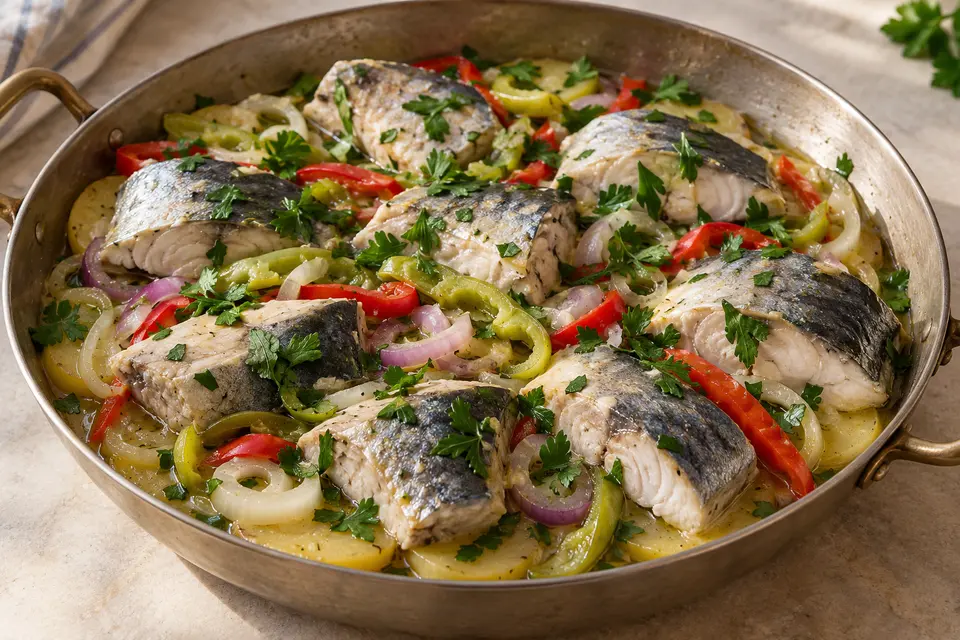
Turkish Steamed Bonito — Giresun Palamut Buğulama
Black Sea bonito gently braised with potatoes, onions and sweet peppers
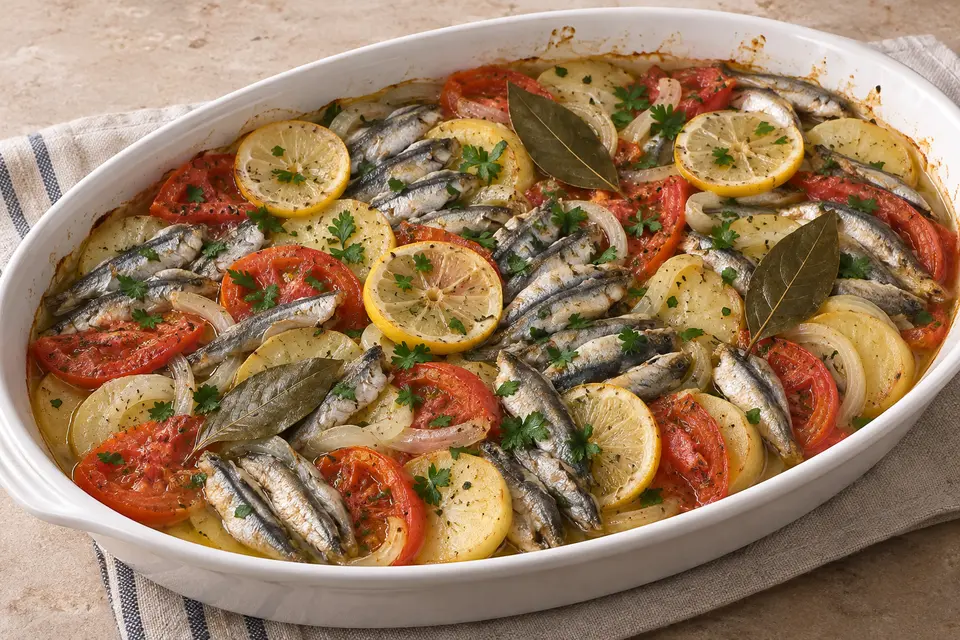
Turkish Baked Anchovies — Hamsi Buğulama
Black Sea anchovies baked with potatoes, tomatoes, onion and lemon