Blog
Artichokes in Turkish Cooking: İzmir Leaves and Aydın Dolma
An artichoke on a Turkish menu does not always arrive as the same neat vegetable cup. It might retain tender leaves, hold a rice filling or appear in a dish with other ingredients. İzmir and Aydın provide two helpful examples of this variety. Reading their preparations side by side makes a familiar vegetable more interesting and helps a home cook choose a recipe that matches the artichokes available.
Begin with the form of the artichoke
GoTürkiye distinguishes the large, bowl-shaped Bayrampaşa variety associated with Marmara from Sakız artichokes common in the Aegean and Mediterranean regions. Those names are useful clues, rather than a guarantee that every artichoke can be prepared in exactly the same way. Size, trimming and tenderness affect what ends up on the plate.
At a market, ask whether you are buying whole artichokes, trimmed bottoms or prepared pieces. A photograph of a filled artichoke bottom cannot explain how to handle a whole one. Before choosing a recipe, compare its starting ingredient with your purchase. This simple question prevents confusion later, particularly when a translated recipe uses the broad English word heart for different cuts.
İzmir: looking beyond the bare cup
The Ministry of Culture and Tourism’s İzmir account describes a local preference for retaining suitable leaves as well as the base. Its olive-oil preparation uses onion, lemon and dill. The example shows why a leafy artichoke dish should not be judged against the appearance of a completely trimmed bottom: both presentation and eating experience differ.
Keeping some leaves does not mean every part is edible. Follow the preparation instructions of a complete recipe, including removal of tough material and the fibrous choke. When serving a leafy version to guests, explain what has been retained and how it is eaten. A short explanation is more helpful than expecting someone unfamiliar with artichokes to understand the plate immediately.
Aydın: an artichoke can hold dolma
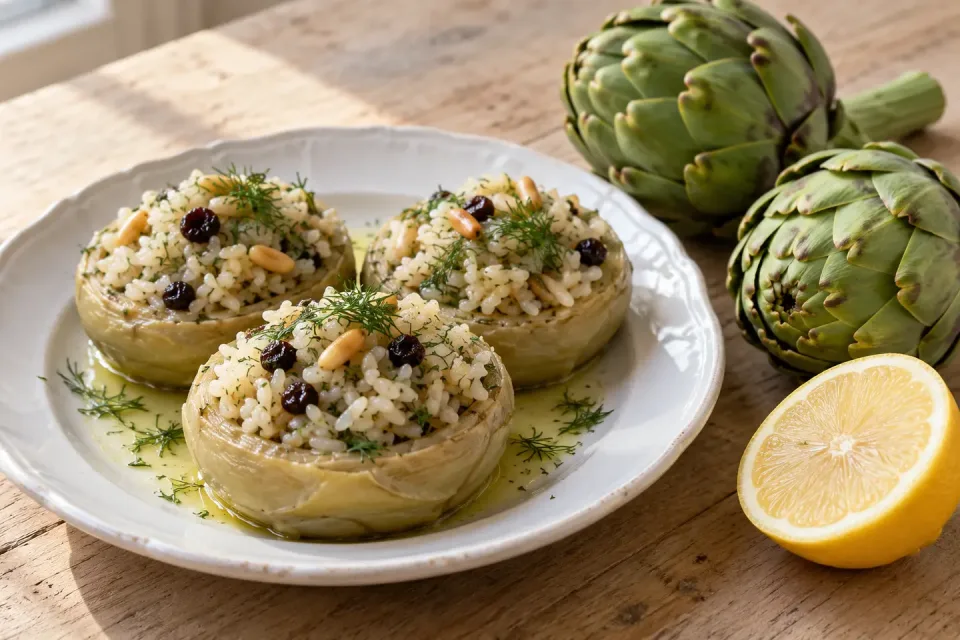
The Culture Portal’s Aydın example fills artichoke bottoms with rice, herbs, pine nuts and currants. It provides another reading of enginar dolması: here the vegetable supports the filling like a shallow bowl. That particular version should not be turned into a rule for every stuffed artichoke made across Türkiye.
Menu words help identify the structure of a dish. Enginar means artichoke, while dolma indicates a filled preparation. Still, the name alone does not reveal the full ingredient list or whether leaves remain attached. Ask about the filling and preparation when those details matter. A regional title introduces a dish; it does not replace the recipe or the cook’s description.
Build a small vegetable-centered table
For a home menu, choose one artichoke preparation as the focus. Our olive-oil green beans offer a separate vegetable dish to explore alongside it, while stuffed zucchini blossoms provide another example of a vegetable carrying a rice filling. These linked recipes are companions for learning about the broader cooking style, not substitute instructions for preparing artichokes.
A little variety in texture is enough: one tender vegetable dish, bread if desired and a modest second plate can make a satisfying arrangement. If serving rice-filled artichokes, consider whether another rice-heavy dish adds anything to the meal. This is practical menu planning, not a prescribed regional course order. Keep the names of the dishes clear, share their ingredients with guests and let each preparation retain its own character.
Recipes
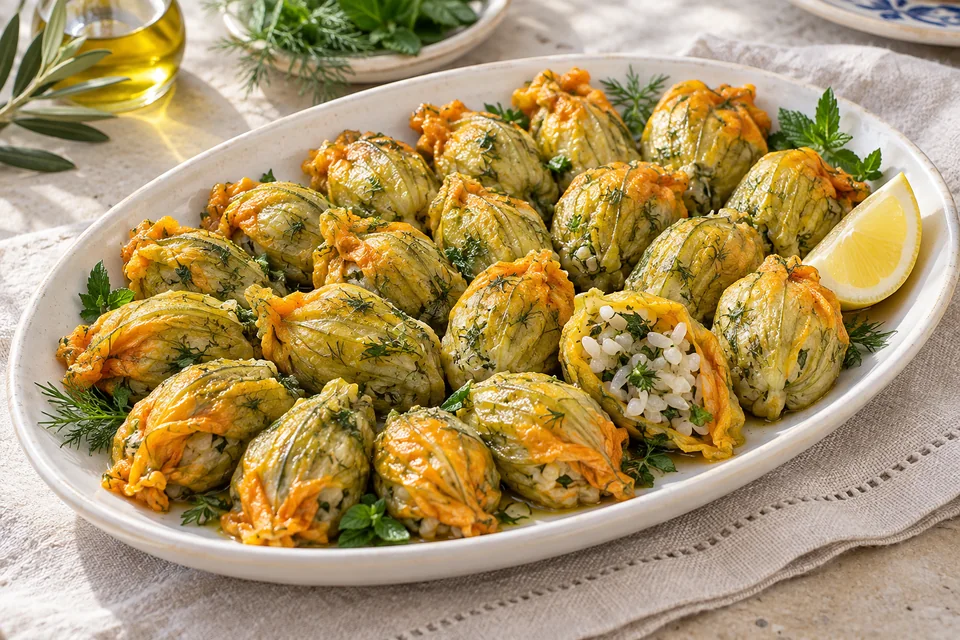
Turkish Stuffed Zucchini Blossoms — Kabak Çiçeği Dolması
Aegean stuffed zucchini blossoms with rice and fresh herbs
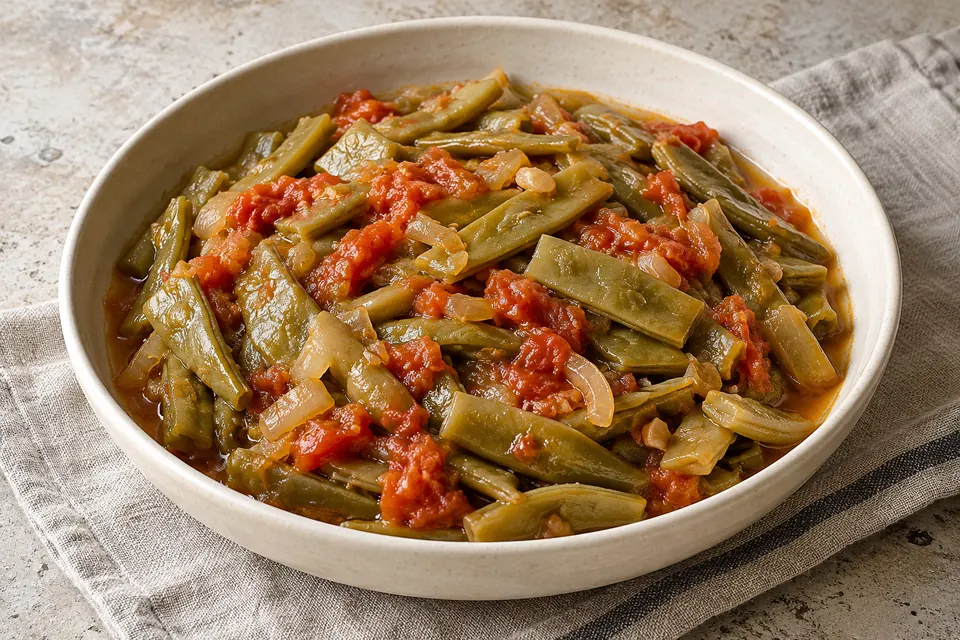
Turkish Olive-Oil Green Beans — Zeytinyağlı Taze Fasulye
Turkish green beans braised with tomatoes, onion and olive oil